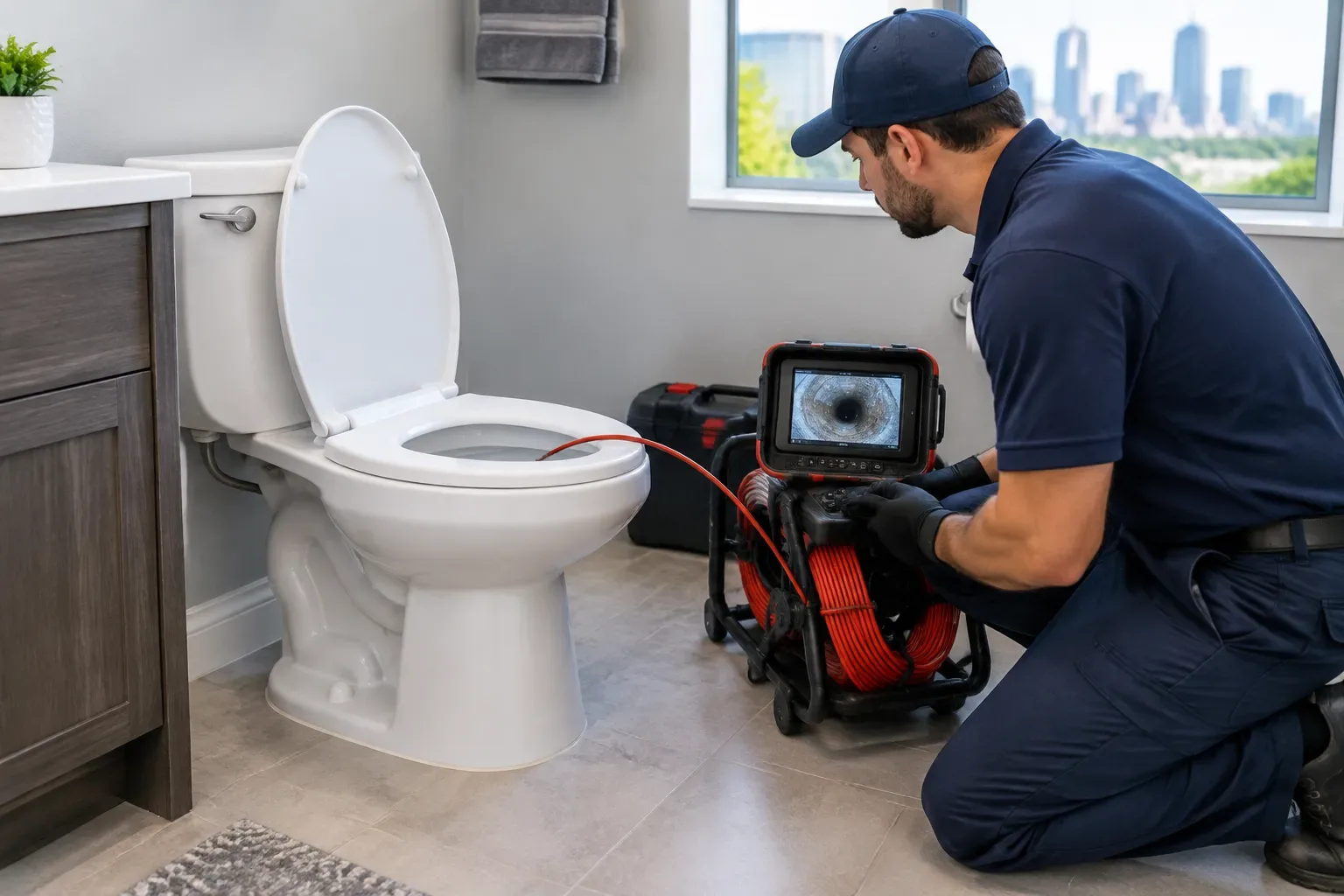
Why Is My Toilet Still Clogged Near Fondren in Sharpstown?
A toilet that stays clogged or clogs again after plunging usually means the blockage was only partly moved, not removed. It can also point to an object caught in the toilet’s built-in trap, a weak flush, a restriction farther down the drain, or a shared drain or sewer problem if other fixtures are acting up too.
For households near Fondren and Sharpstown, the location alone does not identify the cause. The useful clues are what the bowl does, whether nearby sinks or tubs react, and how quickly the problem returns. Houston Plumbers Pro LLC can help determine whether the issue is confined to the fixture or lies farther downstream.
Quick Answer
Stop flushing if the water level rises, drains slowly, or threatens to overflow. Try a proper toilet plunger once or twice, but do not keep repeating flush-and-plunge cycles. If the toilet blocks again soon afterward, gurgles when another fixture runs, or is joined by slow or backing-up drains elsewhere, treat it as a recurring plumbing problem rather than a one-time clog.
A toilet-only problem may be in the bowl trap or the short drain section just beyond it. Multiple affected fixtures can indicate a restriction in a shared branch drain or the building sewer, which requires diagnosis rather than more force from a plunger.
What does it mean when a toilet clogs again after plunging?
A plunger works by moving water and pressure through the trapway, the curved passage built into the toilet. It can loosen soft material or shift a partial obstruction enough for the bowl to drain. That does not prove the drain is clear.
If the bowl flushes normally once and then clogs after the next use, the obstruction may still be present. It may have been compressed, moved slightly farther along, or left behind in a position that continues to catch paper and waste. A recurring clog deserves a closer look because repeated flushing can turn a manageable backup into an overflow.
Is the blockage in the toilet, a drain line, or the sewer?
The symptom pattern helps narrow the likely level of the problem, but it does not confirm a diagnosis by itself.
One toilet is affected
If only one toilet is slow or backs up while nearby fixtures drain normally, the issue may be in that toilet’s trapway or its immediate drain connection. A lodged object, excess paper, or a partial local blockage are possibilities.
The toilet reacts when a nearby fixture drains
If running a sink, shower, or tub makes the toilet gurgle or change water level, a shared branch drain may be restricted. Water is looking for air or space in a line that is not draining freely.
Several fixtures back up or drain poorly
If more than one toilet, sink, tub, or shower is affected, the restriction may be farther downstream in a shared drain or building sewer. This is a reason to stop DIY clearing attempts and arrange prompt professional assessment.
A typical inspection can establish where the flow stops and whether the toilet itself needs repair or the drain system needs clearing. For a fixture-specific issue, see the available residential toilet repair service. When symptoms indicate a more general blockage, residential opening blockage service is the more relevant next step.
Which symptoms mean I should stop flushing immediately?
An active overflow is the clearest stop signal, but several less dramatic symptoms also matter:
- Bowl water rises unusually high after flushing.
- The bowl drains very slowly, then refills or threatens to spill.
- A tub or shower receives water when the toilet is flushed.
- Nearby fixtures gurgle, bubble, or lose water from their traps.
- Wastewater appears in a tub, shower, floor drain, or another fixture.
- A sewage odor appears along with slow or backing-up drains.
Wastewater can contaminate floors and adjacent surfaces. Keep people and pets away from affected water, avoid using connected fixtures, and clean only after the plumbing issue is controlled. If there is an overflow, sewage backup, or several fixtures are involved, emergency plumbing assistance in Southwest Houston may be appropriate.
What can I safely try before scheduling service?
A careful first attempt is reasonable when the bowl is not overflowing and no other fixtures are showing backup symptoms. The goal is to clear a simple obstruction, not force an unknown blockage deeper into the system.
- Stop flushing and turn off the toilet’s shutoff valve if the bowl is rising or has nearly overflowed.
- Check whether sinks, showers, tubs, or other toilets are slow, gurgling, or backing up. Do not run extra water just to test the system if drainage already appears compromised.
- Use a flange-style toilet plunger, keeping the cup submerged and maintaining a seal over the outlet. Plunge in controlled strokes, then wait to see whether the water level settles.
- If a toilet-only clog remains, a closet auger may reach an obstruction in the toilet trapway. Use it gently and stop if it will not pass or retrieve the obstruction.
- If the clog returns, other fixtures react, or wastewater appears, stop the DIY effort and arrange an inspection.
A closet auger is made for the curved porcelain path inside a toilet. It is different from a general drain snake, which can damage the fixture or become difficult to control when used through the bowl. Removing the toilet, using a power auger, or opening a sewer cleanout is best left to someone with the right equipment and experience.
Could the toilet itself be causing repeated clogs?
Yes. A physical obstruction can remain in the trapway, and the toilet may also have a performance or component issue that leaves solids insufficiently cleared. A weak or incomplete flush does not automatically mean the whole drain line is blocked.
The EPA’s residential toilet guidance explains that toilet performance is evaluated alongside water efficiency. In practical terms, toilet design and flush performance can matter when deciding whether a recurring problem is a drain restriction, a repair issue, or a fixture that should be assessed for replacement.
Do not assume that a low-water-use toilet is defective simply because it clogs. The relevant finding is how the fixture flushes, whether an obstruction is present, and whether connected drains show symptoms too.
When does a recurring clog point to a drain-line issue?
A downstream restriction becomes more likely when using another fixture changes the toilet’s water level or causes gurgling. The same is true when a toilet backup is accompanied by a slow tub, shower, or sink. These observations suggest that water is encountering resistance beyond the toilet itself, although an inspection is needed to identify the exact location and cause.
Possible findings can include a partial blockage in a shared drain, an obstruction farther along the building sewer, or a plumbing configuration issue that needs evaluation. Not every repeated clog requires replacement work. In some cases, clearing and testing the affected line resolves the issue. If piping work is actually needed after diagnosis, residential water-line and drainage installation provides context for that type of service.
For businesses, restrooms can also have shared-drain symptoms that affect more than one fixture. A commercial property with repeated backup should have its drainage layout evaluated rather than relying on staff to keep plunging individual toilets. Commercial water-line and drainage installation is available for commercial drainage work when an assessment shows that type of scope is needed.
What information should I have ready for a plumber?
Clear observations make diagnosis faster and help distinguish a toilet repair from a drain-line investigation. Before scheduling service, note:
- Which toilet is affected and whether it is the only one.
- Whether the bowl rises, drains slowly, gurgles, or clogs only after certain uses.
- Whether sinks, tubs, showers, or other toilets are also slow or backing up.
- What was flushed before the problem started, if known.
- Whether wastewater overflowed or sewage odor is present.
- What you have already tried, including plunging or a closet auger.
For local service information, visit the Sharpstown plumbing services page. Houston Plumbers Pro LLC states that written estimates are provided before work begins, which can help you understand the recommended scope after the source of the recurring clog is assessed.
What is the most common mistake with a toilet that keeps clogging?
The most common mistake is continuing to flush after a partial clearing. A bowl that empties once can create false confidence, even when the restriction remains. The next flush may bring the blockage back, send water over the rim, or push wastewater into another fixture if the issue is farther down the line.
The practical takeaway is simple: one successful plunge is not proof that the problem is solved. If the toilet clogs again, identify whether the issue is isolated or shared, then get the right level of inspection instead of escalating DIY force.
Ready to discuss your project?
For a toilet that keeps clogging near Fondren or Sharpstown, reach out to discuss the symptoms and arrange an assessment.
FAQ
Why does my toilet clog again the next day after plunging?
A repeat clog often means the plunger shifted the blockage without fully removing it. Material may still be caught in the toilet trapway or farther along the drain. It can also be a flush-performance issue if the toilet does not consistently move waste through the outlet. Check whether other fixtures are affected, and avoid repeated flushing if the bowl begins rising again.
Can plunging make a toilet clog worse?
Plunging correctly is often safe for a simple clog, but aggressive or repeated attempts can compact some obstructions or move them farther into the drain. The bigger risk is flushing between attempts when drainage is uncertain. If the bowl keeps returning to a high water level, stop and do not add more water to the system until the blockage is evaluated.
How do I know if my toilet clog is a sewer-line problem?
A sewer or shared-drain concern is more likely when several fixtures are slow or backing up, when a toilet gurgles as a tub or sink drains, or when wastewater appears in a shower or tub. Those symptoms do not identify the exact cause on their own, but they show the issue may extend beyond the toilet. Review the company plumbing blog for additional household plumbing guidance.
Should I use a toilet auger if the plunger does not work?
A closet auger can be useful for a toilet-only obstruction because it is designed to navigate the fixture’s curved trapway. Use it carefully, and do not force it if it binds or fails to retrieve the blockage. If nearby fixtures are also affected, an auger through the toilet may not reach the actual restriction and can delay proper diagnosis.
Can wipes or a small object cause a recurring toilet clog?
Yes. A wipe, toy, hygiene product, or other solid item can lodge in the toilet trap or just beyond it and catch additional material over time. Even products labeled flushable can create problems in household plumbing. If you suspect an object was flushed, avoid chemical cleaner and repeated forceful flushing because neither is a reliable way to remove it.
Why does my toilet gurgle when I run the sink or shower?
Gurgling can happen when air movement in the drainage system is disrupted by a restriction or another drain-system issue. If the sound occurs alongside slow drainage or changing toilet water levels, stop using the connected fixtures until the condition is assessed. A single gurgle is not a complete diagnosis, but repeated gurgling with backup symptoms should not be ignored.
Is a weak flush the same as a clogged drain?
No. A weak flush can come from a toilet component or fixture-performance problem, while a clogged drain restricts water and waste after it leaves the fixture. The symptoms can overlap. If the bowl does not clear well but every other fixture drains normally, toilet repair may be the starting point. If several fixtures respond, investigate the shared drainage instead.
Who should I contact for a recurring toilet clog near Sharpstown?
Choose a plumbing provider that can distinguish an isolated toilet obstruction from a larger drainage issue rather than treating every return visit as another basic plunge. For a toilet that repeatedly backs up, gurgles, or affects nearby fixtures, you can contact Houston Plumbers Pro LLC to discuss the symptoms and arrange an assessment near Sharpstown.
