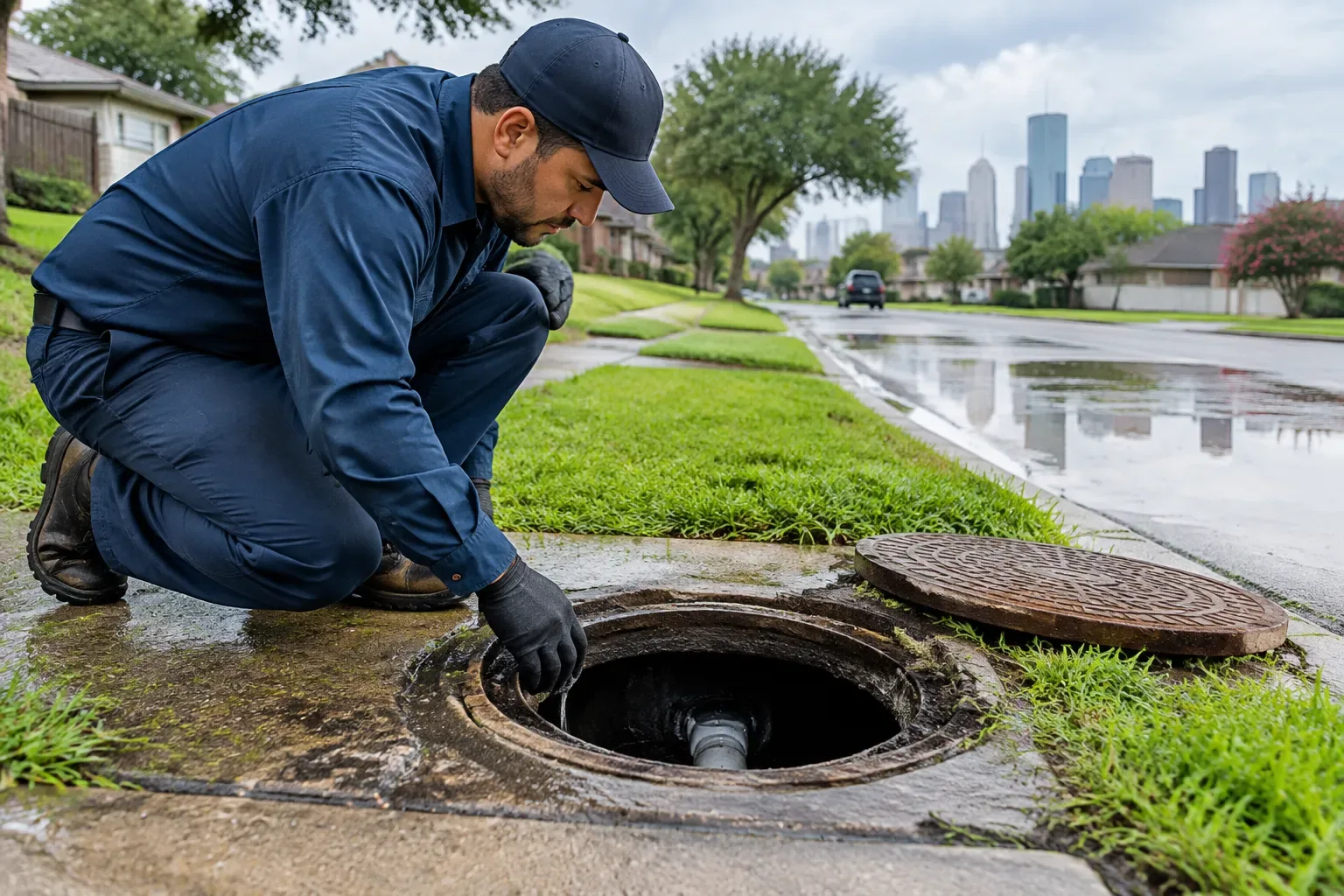
Why Does Sewer Gas Smell After Rain Near Bissonnet in Gulfton?
A sewer-like odor after rain can happen when water and pressure changes expose a weak point in a plumbing system, such as a dry drain trap, blocked vent, loose toilet seal, damaged cleanout, or leaking sewer lateral. Rain can also make an outdoor odor from a neighboring property, street-side infrastructure, or shared drainage system more noticeable. The smell alone does not identify the source.
Near Bissonnet in Gulfton, the practical first step is to pinpoint where the odor is strongest and whether it is limited to one property. Houston Plumbers Pro LLC can help inspect private plumbing, but a smell affecting multiple properties or coming from a street, manhole, or storm drain may need to be reported to the appropriate utility or municipal department as well.
Quick Answer
Rain can increase water flow and hydraulic pressure around drains and sewer piping. That pressure may push odors through an empty trap, an improperly sealed drain opening, a venting problem, or a defect in private sewer piping. Saturated soil can also make leaks in a buried lateral more apparent.
If the odor is inside and strongest at one fixture, start by checking that fixture's trap and drainage behavior. If it is strongest outdoors, near a cleanout, or across more than one building, do not assume the cause is inside your plumbing.
Why can rain make a sewer odor more noticeable?
A properly functioning plumbing system is designed to keep sewer gases inside the drain and vent system, then release them safely above the building. Rain does not automatically cause a plumbing failure. It can, however, reveal a condition that was already present.
Heavy rain and rapid runoff can increase flow in drainage environments and can expose defects in private sewer piping or open drain connections. In established Houston neighborhoods, properties can have different drain materials, vent configurations, cleanouts, and lateral conditions. That is why a diagnosis should begin at the individual property rather than assuming one area-wide cause.
Which plumbing problems can let sewer gas into a building?
Several conditions can produce similar odors, but they require different repairs. A plumbing inspection determines which condition is actually present.
Empty or siphoned P-trap
A P-trap is the curved section below a drain that holds water as a gas seal. A seldom-used shower, floor drain, sink, or laundry standpipe can lose that water and allow odors into the room.
Vent obstruction or venting defect
A plumbing vent balances air pressure so fixture traps stay protected. A blocked, damaged, or incorrectly configured vent can contribute to gurgling, slow drainage, or recurring odor after water moves through the system.
Defective seal or open connection
A loose toilet base seal, damaged cleanout cap, or poorly sealed drain connection can create a direct pathway for odors. The smell may be especially noticeable near the toilet, utility area, or yard cleanout.
Damaged building sewer lateral
The building sewer lateral is the private pipe that carries wastewater from the structure toward the public sewer connection. Cracks, separations, or root-related damage may allow odor or wastewater to escape, particularly when soil is saturated.
A smell near an appliance or utility space can also be caused by something outside the drain system. A suspected natural-gas odor, for example, needs a different safety response than a drain odor. Do not try to identify a gas leak by smell alone or investigate it with a flame.
How do you tell whether the odor is inside plumbing or outside near the street?
The odor location is a useful clue, not a diagnosis. Note where it is strongest before opening doors, running water, or adding cleaners.
| Where the odor is strongest | What it may suggest | Useful next observation |
|---|---|---|
| One sink, shower, or floor drain | Empty trap, local drain issue, or fixture connection problem | Check whether the drain is seldom used and whether adding water changes the odor |
| Toilet base or bathroom floor | Toilet seal issue, drain opening, or nearby plumbing defect | Look for toilet movement, staining, bubbling, or drainage changes |
| Laundry room or utility area | Floor drain, standpipe, cleanout, or drain connection issue | Check for a dry floor drain and slow or noisy drainage |
| Yard or cleanout area | Open cleanout, damaged lateral, or outdoor source | Do not remove a cap casually; note any wet ground, staining, or odor after storms |
| Street, manhole, or multiple nearby properties | Shared private plumbing, neighboring source, or public infrastructure | Document locations and determine whether others notice the same odor |
Bissonnet is a busy urban corridor with nearby residential, multifamily, and commercial activity. That can make an odor source difficult to identify from one property alone. A nearby smell may originate from a neighboring building, shared private piping, grease-affected commercial drainage, or public infrastructure, not necessarily from the fixtures in the building where it is noticed.
What should you do when the smell appears after a storm?
Avoid treating the odor as a simple cleaning issue. First collect observations that can help separate a fixture-level problem from a sewer-line or outdoor problem.
- Ventilate the area by opening windows or doors if it is safe to do so. Avoid flames, smoking, switches that could create sparks, and any attempt to inspect enclosed sewer spaces.
- Identify the strongest location: a specific drain, toilet base, laundry area, crawlspace, yard, cleanout, roof area, or street.
- Run water briefly into seldom-used sinks, showers, tubs, and floor drains to restore their trap seals. Do not overfill or force water into a drain that is already backing up.
- Record the rain timing, whether drains gurgle or run slowly, whether toilets bubble, and whether you see staining, wet ground, or sewage backup.
- If the odor persists, repeats after rain, or occurs with drainage symptoms, arrange a plumbing evaluation. If the smell is clearly street-side or affects multiple properties, report the outside condition to the appropriate authority too.
Do not enter a manhole, reach into a sewer opening, or remove a cleanout cap without understanding the hazards. Sewer environments can contain hazardous gases. OSHA explains that hydrogen sulfide can create health and flammability hazards at sufficient concentrations.
When is a sewer smell an urgent safety issue?
Leave the immediate area and seek appropriate emergency help if the odor is very strong, you develop headache, dizziness, nausea, eye irritation, or breathing difficulty, or you suspect natural gas rather than a drain odor. Keep people and pets away from sewage backup and avoid ignition sources.
Sewer gas can enter a building through drains, fixtures, defective plumbing, and other openings, which is why the EPA recommends identifying and correcting the source rather than simply masking the odor. A backup, wastewater emerging from a drain, or an overflowing toilet is also a plumbing priority because it can create contamination and property damage.
What can a plumber inspect after rain-related sewer odor?
The inspection should match the evidence, not jump straight to excavation or replacement. A professional may check trap seals, fixture connections, toilet stability, cleanout condition, drainage performance, and venting clues. If the symptoms point beyond an individual fixture, camera inspection or other diagnostic testing may be appropriate for the building sewer.
For a home, residential water-line and drainage installation information can help explain the type of piping work that may be needed if an inspection confirms a drainage defect. For a business or multifamily-related issue involving building drainage, see commercial water-line and drainage installation. These services are not a substitute for determining whether the odor is actually from private piping, a neighboring property, or a public system.
A recurring odor with wet soil, sewage staining, slow drains, or repeated backups may warrant prompt sewer-line evaluation. A temporary odor change after pouring chemicals down a drain does not establish that the underlying problem is fixed.
What is the most common mistake after a sewer odor?
The common mistake is assuming the smell must be a neighborhood sewer problem, or assuming it must be one dry drain. Either shortcut can delay the right repair.
Start with the observable pattern. One unused bathroom drain may respond to water in the trap. Multiple fixtures draining slowly, bubbling, or backing up can point to a more extensive private drainage issue. An odor concentrated outside near street infrastructure or reported by several buildings may be outside the scope of one property's plumbing, although private plumbing should still be checked when symptoms occur on-site.
The practical takeaway is simple: document the location and timing, refill unused traps, and have persistent or high-risk symptoms evaluated based on evidence rather than odor alone.
Ready to discuss your project?
For recurring post-rain sewer odors near Bissonnet in Gulfton, request an inspection to pinpoint the source before choosing a repair.
FAQ
Why does my bathroom smell like sewer after heavy rain?
A bathroom odor after heavy rain may come from a dry shower, tub, sink, or floor-drain trap. It can also be related to venting, a toilet seal, or a drainage issue that becomes more noticeable when water flow and pressure change. Add water to seldom-used drains first, then watch for gurgling, slow drainage, or odor return. If the smell persists, a plumbing inspection can identify the actual entry point.
Can heavy rain cause sewer gas to come up through a floor drain?
It can make an existing problem easier to notice. A floor drain without a proper water seal, or one that has dried out, can allow odors into the room. Rain-related pressure changes may worsen the smell, but they do not prove that the public sewer is backing up. If water or sewage rises from the drain, stop using nearby fixtures and seek plumbing help.
Is sewer gas the same thing as a natural gas leak?
No. Sewer gas and natural gas are different hazards, though both can have unpleasant odors and should be treated cautiously. If you suspect a fuel-gas leak, smell a strong sulfur-like odor, hear hissing, or have symptoms, leave the area and follow your gas utility's emergency guidance. For building-side fuel-gas concerns, commercial gas leak repair information explains the type of professional service involved.
Should I pour bleach or drain cleaner down a smelly drain?
Cleaner may change an odor temporarily, but it cannot restore a missing trap seal, repair a toilet seal, clear a blocked vent, or fix a damaged sewer line. Harsh chemicals can also create handling risks and complicate service work. Plain water is the safer first step for a seldom-used drain. Persistent odor needs diagnosis based on the drain condition and other symptoms.
How do I know if the sewer odor is coming from outside my property?
An outdoor source is more likely when the odor is strongest near a street, manhole, storm drain, neighboring property, or shared area rather than at a fixture. Reports from multiple nearby buildings are another clue. Still, an outdoor odor does not rule out a private issue on your property. Record the location and timing, then report public-area conditions to the proper authority while arranging private inspection if your fixtures show symptoms.
Can a cracked sewer line smell worse after rain?
Yes, saturated soil and increased water movement can make an existing lateral defect more noticeable. A crack, separation, or other defect is not confirmed by odor alone. Wet ground, sewage staining, slow fixtures, backups, or repeated post-rain odor provide stronger reasons for inspection. A camera inspection or other testing may be needed before deciding whether repair work is appropriate.
Why do my drains gurgle when it rains?
Gurgling happens when air is moving through a drain in an unusual way. It may be associated with a venting issue, a partial blockage, or pressure changes in the drainage system. It does not identify one specific repair by itself. If gurgling occurs with slow drains, toilet bubbling, or sewer odor, review additional plumbing guidance from the company blog and arrange an evaluation if the pattern continues.
Do I need a plumber if the smell goes away after I add water to the drain?
Not always. If the odor disappears and stays gone after water is added to a seldom-used fixture, the trap may simply have dried out. Keep that drain filled by using it periodically. If the odor returns soon, multiple drains smell, or you notice gurgling and drainage problems, the simple dry-trap explanation may not be enough and a professional inspection is reasonable.
