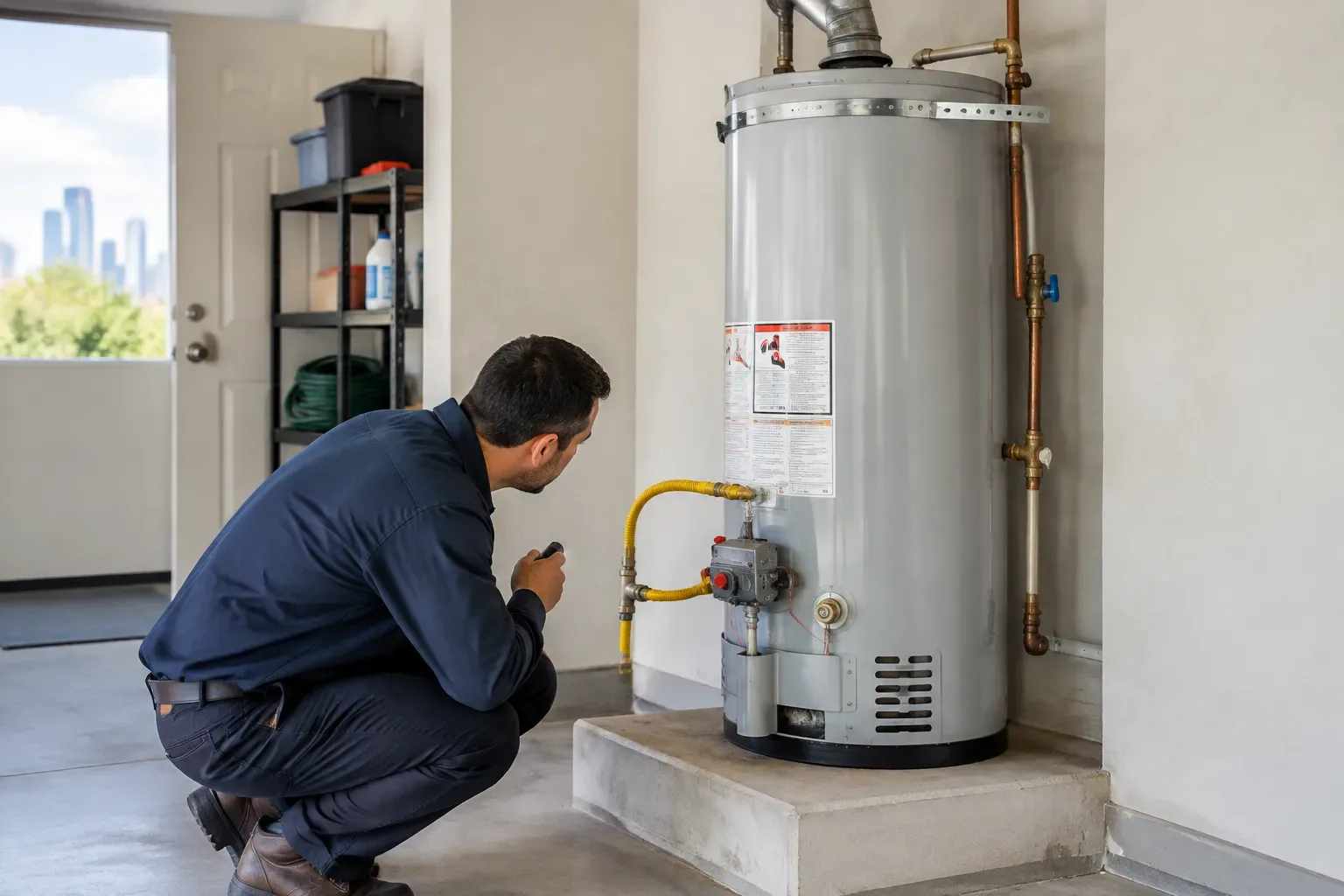
Why Does My Gas Water Heater Smell Near Fondren Rd in Sharpstown?
A gas-like, rotten-egg, exhaust, or sulfur smell near a water heater can come from several sources, but a natural-gas leak must be ruled out first. If the odor is strong, getting worse, or accompanied by hissing, leave the building without operating switches, appliances, phones, or vehicles nearby. Call the gas utility or 911 from a safe location.
A faint or intermittent odor does not prove one specific problem. It could relate to a gas connector, control valve, burner ignition, venting, a nearby drain, or another source entirely. For homes and businesses near Fondren Road in Sharpstown, the safe next step depends on the odor and immediate conditions, not on trying to troubleshoot it with a flame or by relighting the pilot.
Quick Answer
Treat a rotten-egg or gas smell near a gas water heater as a possible gas leak until qualified professionals determine otherwise. Leave and report it from a safe location if it is strong, persistent, increasing, or paired with hissing. Once the immediate area is safe, a plumbing professional can inspect the appliance and gas piping.
Carbon monoxide is a separate concern. It has no odor, so not smelling gas does not confirm that a fuel-burning appliance is operating safely. The EPA explains that carbon monoxide cannot be detected by smell.
What should I do if I smell gas near my water heater?
Your first decision is about safety, not diagnosis. A strong natural-gas odor, especially one that spreads beyond the water-heater area or occurs with a hissing sound, warrants leaving immediately.
- Leave the home or building if the gas smell is strong, increasing, or accompanied by hissing, dizziness, nausea, or a carbon-monoxide alarm.
- Do not turn lights or appliances on or off, use a phone indoors, start a vehicle nearby, smoke, or create a flame.
- From a safe location, contact the gas utility or call 911 when the situation appears urgent.
- Do not re-enter until the appropriate emergency responder or utility representative says it is safe.
- After the immediate hazard is addressed, arrange inspection and repair of the water heater, gas connection, or related plumbing equipment as needed.
For a non-emergency repair need after the area has been made safe, Houston Plumbers Pro LLC provides plumbing services in Southwest Houston. The goal of an inspection is to identify the actual source rather than assuming every odor is a water-heater failure.
What kind of smell is coming from the water-heater area?
The smell you notice is an observable symptom. It can point an inspector toward certain areas, but it cannot confirm a cause by itself. These odors can be confused with one another in a utility closet, garage, or mechanical room.
Rotten egg or sulfur smell
Natural gas is odorized so leaks may be noticed. Treat this smell as a possible gas leak, particularly when it is persistent or strongest near the gas shutoff, connector, or control valve.
Exhaust or burnt-fume smell
Combustion or venting issues can create exhaust-like odors when the burner runs. A vent connector, draft, combustion air, and burner operation may need professional evaluation.
Sewer-like sulfur smell
A dry drain trap, drain buildup, or another plumbing odor can mimic a gas smell. This is not a reason to dismiss the odor without first considering gas safety.
Hot plastic or electrical smell
Overheating electrical parts, wiring, or nearby equipment may create this odor. Turn away from the area and seek appropriate emergency or electrical help if there is smoke, heat, or visible damage.
A true gas odor may be continuous, but it can also be more noticeable during burner ignition or operation. An odor that appears only when the burner starts may suggest an ignition, combustion, or draft concern. Only an inspection can establish whether there is a leaking gas-supply component, incomplete combustion, altered venting, or another issue.
Could the odor be natural gas, combustion exhaust, or a drain problem?
Yes. Those possibilities require different solutions, which is why guessing can create risk or lead to an unnecessary repair.
A leaking connector, shutoff, valve, or appliance control is a possible source of natural-gas odor. A professional finding would require checking the gas-side components and confirming whether gas is escaping. Do not tighten a fitting yourself, because disturbing a damaged connection can worsen a leak.
Combustion concerns are different. A burner that does not burn properly, inadequate combustion air, or poor vent draft can affect how exhaust leaves the area. Carbon monoxide is odorless, and a carbon-monoxide alarm should be installed and maintained according to its manufacturer instructions. An alarm is helpful, but it does not replace appliance inspection.
A nearby floor drain, laundry drain, or other drain opening can also produce a sulfur or sewer-like smell. If the odor is ultimately traced to drainage rather than gas, the appropriate repair may involve a trap, drain line, or water-line and drainage work instead of the water heater. See residential water line and drainage installation for that distinct type of plumbing issue.
What should a professional inspect after the immediate danger is addressed?
A useful inspection looks beyond the burner. Depending on the odor and equipment setup, the evaluation may include:
- The gas shutoff, flexible connector, fittings, and water-heater control valve for condition and possible leakage.
- The pilot or ignition system, burner area, and visible signs of abnormal combustion.
- The vent connector and its condition, routing, and draft performance.
- Available combustion air and whether nearby exhaust equipment could interfere with proper draft.
- Visible corrosion, water damage, or changes to the installation that could affect safe operation.
- Nearby drains or plumbing components when the odor seems sulfurous or sewer-like rather than distinctly gas-like.
Houston's humidity and severe storms can contribute to corrosion on exposed metal hardware and can affect ventilation conditions around fuel-burning appliances. Older or altered installations may also have deteriorated connectors, insufficient clearances, or venting changes. Those are reasons to inspect the full installation rather than relying on odor alone.
For an issue confirmed to involve gas piping or a gas connection, commercial gas leak repair is available for business properties. Commercial spaces may have different equipment layouts and ventilation conditions, so the water heater and surrounding gas system should be evaluated in context.
Is a faint smell near the pilot light normal?
Do not assume it is normal. Some people notice a brief odor during ignition, but a recurring, lingering, or increasing gas smell deserves prompt attention. A normal appliance should not leave the surrounding area smelling strongly of gas.
The common mistake is trying to prove the issue is minor by relighting the pilot or waiting for the smell to fade. That can expose occupants to an avoidable hazard and can make a developing problem harder to identify. Make note of when the odor occurs only after you are in a safe location: continuously, during ignition, while the burner runs, after shutdown, or only near a drain.
When does this become an emergency?
Leave immediately and report the situation from a safe place when you notice a strong or spreading gas odor, hear hissing, see damaged gas components, feel ill, or receive a carbon-monoxide alarm alert. A fire, smoke, or symptoms of possible carbon-monoxide exposure call for emergency services.
If the gas utility or emergency responder has addressed the immediate safety concern and a water-heater or plumbing repair remains, an inspection can focus on the equipment. For urgent plumbing situations outside a suspected gas emergency, review emergency plumbing services in Southwest Houston.
What repair might be needed once the source is confirmed?
The right repair is source-specific. A defective gas connector or valve may need repair or replacement. A venting issue may require correction to the vent components or installation arrangement. A burner or control issue may call for water-heater service, while a drain odor could require drain or trap work instead.
Do not default to replacing the entire water heater before the cause is identified. Replacement can make sense if the appliance itself is found to be defective or unsuitable for safe repair, but it will not solve a gas-piping, venting, or drainage issue outside the tank. For water-heater-specific evaluation, see residential water heater service.
For commercial properties where drain odor or drainage conditions are part of the investigation, commercial water line and drainage installation addresses that separate system category.
What is the practical takeaway for Sharpstown property owners?
Near Fondren Road or anywhere else in Sharpstown, a gas-water-heater odor should be handled as a safety question first. Leave and report a strong or suspicious gas smell, then have the correct system inspected once the area is safe. The best repair is the one that matches a confirmed finding, not the odor's first impression.
Ready to discuss your project?
If a water-heater odor remains after the area is declared safe, request an inspection for your Sharpstown property.
FAQ
Why does my gas water heater smell like rotten eggs?
Natural gas is commonly odorized to smell sulfur-like or similar to rotten eggs, so that odor can indicate a possible leak near the water heater or its gas connection. A drain-related odor can smell similar, but it should not be assumed to be plumbing-only until gas safety has been addressed. If the odor is strong, spreading, or accompanied by hissing, leave and contact the gas utility or 911 from outside.
Can a gas water heater produce carbon monoxide?
Yes. Fuel-burning appliances can create carbon monoxide when combustion or venting is not working properly. Carbon monoxide has no smell, so a gas odor is not a reliable warning for it. Use and maintain carbon-monoxide alarms according to their manufacturer instructions, and seek emergency help if an alarm activates or anyone feels ill. A professional should assess burner operation, venting, draft, and combustion-air conditions.
Should I turn off my water heater if I smell gas?
Do not try to operate the water heater, relight it, or adjust the gas control if there is a strong or suspicious odor. Leaving the building without using electrical switches or other ignition sources is the safer response. The gas utility or emergency responders should guide the immediate safety steps. Once cleared, a plumber can determine whether appliance or piping repairs are needed.
Why does the smell happen only when the burner turns on?
Timing can be a useful clue, but it is not a diagnosis. An odor during burner operation may relate to ignition, combustion, vent draft, or heat revealing an issue near a connector or valve. It could also coincide with air movement that makes an existing odor easier to notice. Document the timing only after you are safe, then arrange an appropriate inspection rather than testing it yourself.
Can a dry drain smell like gas near a water heater?
Yes. A dry trap or buildup in a nearby drain can release sewer-like odors that some people mistake for gas. Adding water to a clearly identified, unused drain trap may help restore its seal, but do not perform that step if you still suspect an active gas leak or smell a strong rotten-egg odor. For more plumbing guidance, visit the Houston Plumbers Pro blog.
Who should I call first for a gas smell near my water heater?
For a strong, worsening, or hissing gas odor, leave first and call the gas utility or 911 from a safe location. A plumbing professional is appropriate after the immediate danger has been addressed or for a non-emergency evaluation of the water heater, gas connection, venting, or a look-alike drainage odor. Do not wait for a routine appointment if the situation appears unsafe.
Is it safe to sleep in a house that smells faintly of gas?
A faint smell should not be ignored or monitored overnight. Natural-gas odor can be intermittent, and the source may change as the appliance cycles. Leave and seek guidance from the gas utility or emergency services if you suspect a leak, especially if the odor persists or becomes stronger. If a carbon-monoxide alarm sounds or anyone feels unwell, treat it as an emergency.
