What Gas Smell Near Beechnut Should Make Sharpstown Residents Leave?
A strong, unexplained, sulfur-like or rotten-egg odor inside or near a home should make Sharpstown residents leave immediately. Do not wait to determine whether it is the stove, water heater, furnace, meter, or a pipe. Move everyone away from the building, avoid anything that could create a spark, and call 911 or the emergency number for the gas utility serving that address from a safe location.
A faint odor that comes and goes still deserves caution. Changing airflow can make an odor less noticeable without resolving its source. Houston Plumbers Pro LLC can help with a plumbing-related gas-line inspection or repair after emergency responders or the gas utility says it is safe to proceed.
Quick Answer
Leave if you smell an unexplained gas odor indoors, smell it strongly outdoors near the building, hear hissing near gas equipment or piping, or notice the odor alongside physical symptoms such as dizziness or nausea. Take people and pets with you, move away from the property, and make emergency calls only after you are outside and clear of the area.
Do not turn lights on or off, use a phone indoors, start a vehicle nearby, light a match, test appliances, operate a garage-door opener, or try to locate the leak yourself. The National Fire Protection Association's natural-gas safety guidance also advises avoiding ignition sources around a suspected gas leak.
Which gas odors mean you should get out right away?
Natural gas is commonly odorized so people can detect it, often described as a rotten-egg or sulfur smell. Smell is an observable warning sign, not a diagnosis. It cannot tell you where the gas is coming from, how much is present, or whether the issue is in a gas line, appliance connection, meter area, or somewhere outside the plumbing system.
Leave rather than investigate if the odor is strong, sudden, unexplained, recurring, or present in an enclosed area. The same applies if you hear a hissing sound near a gas appliance, line, or meter. CenterPoint Energy's gas-safety instructions advise leaving the area and contacting the utility or emergency services from a safe location when gas is suspected.
Do not use the odor fading as a reason to go back inside. Open doors, wind, air conditioning, and changing conditions can affect what you notice.
What should you do before calling anyone?
The safest sequence is simple: leave first, then communicate from a safe distance. Do not pause to collect belongings, check the stove, or shut down equipment unless emergency responders specifically direct you to do so from a safe position.
- Leave the building immediately, taking other occupants and pets with you if you can do so without delay.
- Move away from the building and avoid using electrical switches, electronics, flames, vehicles, or other possible ignition sources nearby.
- From a safe location, call 911 if there is immediate danger, or contact the emergency line for the gas utility that serves the property.
- Follow the utility's or emergency responders' directions and do not re-enter until they say it is safe.
- After clearance, arrange any needed diagnosis and repair of plumbing-related gas components.
Gas-utility territories can vary by address in the Houston area. Rather than assuming which provider serves a Beechnut-area property, check the utility listed for that address or use 911 when there is an immediate threat.
What should you never do when a house smells like gas?
The most common mistake is trying to confirm the source before leaving. A smell near a range, water heater, or furnace may tempt someone to inspect it, but operating a control knob or switch can create an ignition risk.
Avoid these actions until qualified emergency personnel say the area is safe:
- Turning lights, fans, thermostats, breakers, or appliances on or off
- Using a phone, doorbell, garage-door opener, flashlight, match, lighter, or cigarette in or near the suspected area
- Starting or moving a vehicle close to the building
- Searching with a flame or attempting a do-it-yourself repair
- Re-entering because the smell seems weaker
A household in this situation might notice a brief rotten-egg odor near the water heater after a door is opened. That observation could relate to several conditions, including a gas connection, an appliance issue, or an odor drifting from elsewhere. It does not establish the cause, so evacuation and emergency guidance still come before inspection.
Could the odor be from a water heater, stove, or another system?
Possibly, but no one should identify the source by smell alone. Houston homes can have different appliance layouts, interior gas piping, meters, and past alterations, so visual guesswork is unreliable. A professional finding requires a safe inspection and appropriate testing after the emergency response is complete.
Appliance connection
A connection at a gas water heater, range, dryer, furnace, or other gas appliance may need inspection. Do not touch or tighten it during a suspected leak.
Interior gas piping or shutoff component
A line or valve within the structure can require professional evaluation after the area is cleared. The odor alone cannot confirm which component is involved.
Meter or exterior piping
A smell outside can still be serious and may fall under the gas utility's response process. Keep clear and report it from a safe location.
A non-gas odor
Sewer gas, a failing appliance, chemicals, or another source can sometimes produce an unpleasant odor. That possibility is not a reason to stay inside and investigate an unexplained sulfur-like smell.
For a residential plumbing-related issue that remains after emergency clearance, review residential gas leak repair. If the concern is at a business, restaurant, or other commercial property, the appropriate post-clearance service path may involve commercial gas leak repair.
Is carbon monoxide the same thing as a natural-gas smell?
No. Carbon monoxide is odorless, so you cannot rely on smell to detect it. It is produced by incomplete combustion and can be associated with fuel-burning equipment, but it is a separate hazard from the odorized natural gas people often describe as rotten eggs.
If a carbon-monoxide alarm sounds, or someone has headache, dizziness, nausea, weakness, confusion, or fainting near a fuel-burning appliance, get everyone into fresh air and seek emergency help. The U.S. Consumer Product Safety Commission explains that carbon monoxide is odorless and hazardous. Do not assume a lack of gas odor means there is no risk.
When does a plumber become the right next call?
A plumber is not a substitute for 911, the fire department, or the serving gas utility during an active suspected leak. The right time for plumbing work is after the property is released for re-entry or when the utility tells you a repair on the customer-owned side is needed.
At that stage, a licensed professional may inspect accessible gas piping, appliance connections, shutoff components, and related plumbing-side equipment. The inspection may show that the issue is outside a plumber's scope, such as a utility-owned component or a non-plumbing appliance condition. In that case, the realistic next step is the utility or an appropriately qualified appliance professional, not an unnecessary gas-line repair.
For service in the neighborhood after clearance, see plumbing services in Sharpstown. Houston Plumbers Pro states that written estimates are provided before work begins, which gives property owners a chance to understand the proposed repair scope before authorizing it.
What if the smell is outside near the meter or driveway?
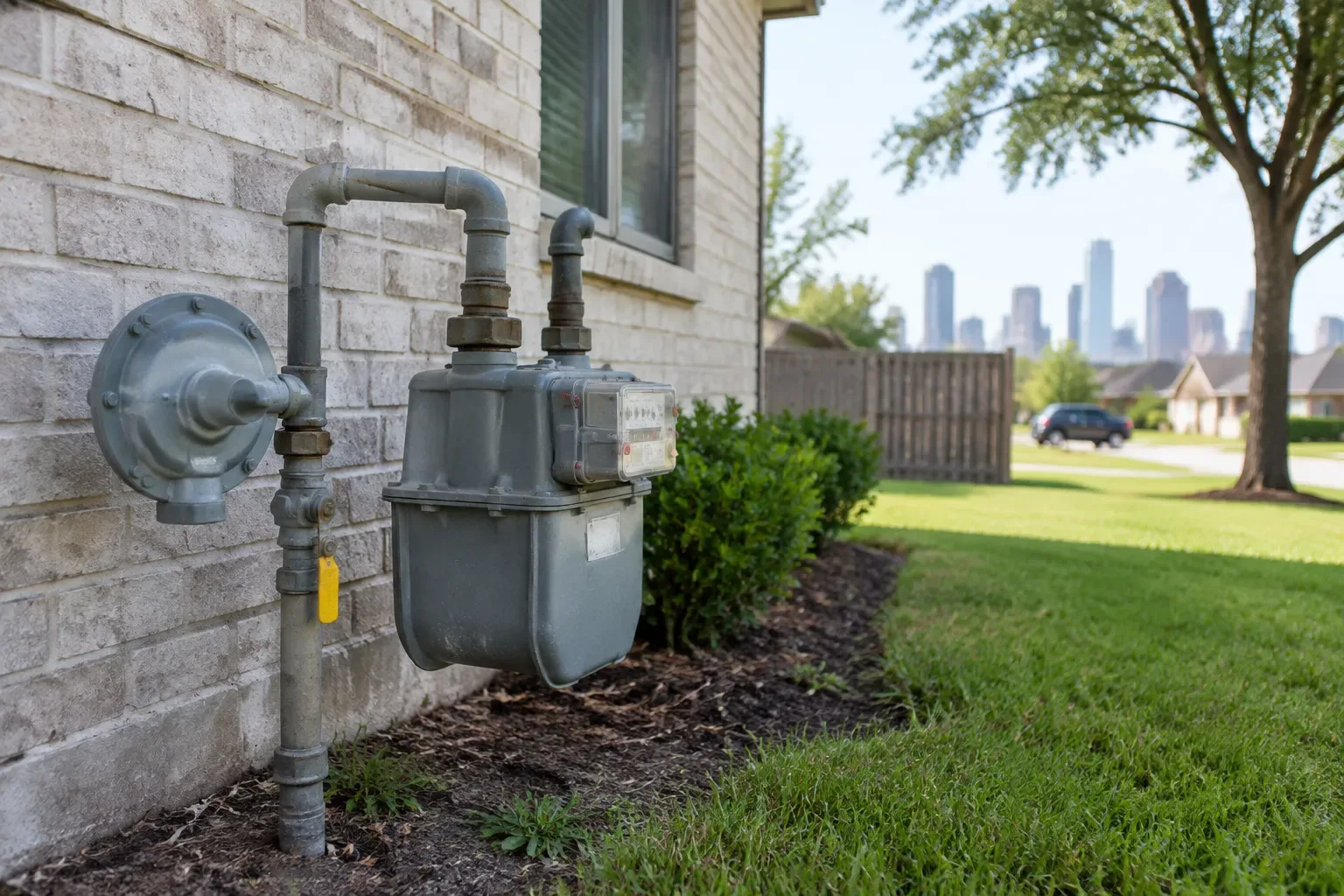
Treat a persistent outdoor gas odor near a meter, line, wall penetration, or equipment area seriously. Keep people away, do not start a car nearby, and report it from a safe location to the utility or 911 when immediate danger is present. Do not assume the issue belongs to the homeowner or to the utility based on where the odor seems strongest.
Once the emergency response identifies which side of the system needs attention, the repair path becomes clearer. Interior and customer-owned piping may require a plumbing repair, while utility equipment follows the utility's process. For non-gas water or drainage work discovered during a property assessment, new water line and drainage installation is a separate service and should not be confused with emergency gas response.
The practical takeaway for Beechnut-area households
An unexplained gas smell is not a troubleshooting project. Leave, call from outside, wait for professional clearance, and only then arrange the repair that the inspection actually supports. That approach protects occupants and prevents the common mistake of creating a spark while trying to find the source.
Ready to discuss your project?
After the property is cleared, Sharpstown residents can request an inspection for a suspected plumbing-related gas-line issue.
FAQ
Should I leave my house if I only smell gas for a few seconds?
Yes, an unexplained gas odor that appears briefly can still warrant leaving and reporting it from a safe location. Air movement can change the concentration you notice, so a disappearing odor does not confirm that the condition is gone. Avoid checking appliances or switches to see whether the smell returns. Follow the gas utility's instructions or call 911 if you believe there is immediate danger.
Can I turn off the gas valve if I smell gas in my house?
Do not delay evacuation to manipulate a valve. Turning equipment or touching a shutoff can create risk if gas is present, and the correct action depends on the situation and the equipment involved. Get outside first and let the utility or emergency responders tell you what to do. After clearance, a professional can determine whether a customer-owned valve or line needs repair.
Who do I call for a gas smell near Beechnut?
Call 911 if there is immediate danger, such as a strong odor, hissing, a fire concern, or anyone feeling ill. Otherwise, contact the emergency number for the gas utility serving your exact address after moving to a safe location. Do not assume every Sharpstown property has the same utility provider. For post-clearance plumbing assistance, emergency plumbing in Houston may be the appropriate next step.
Is a rotten-egg smell always a natural-gas leak?
No. A sulfur-like odor can have other causes, including sewer gas, chemicals, or appliance-related issues. But a resident cannot safely rule out natural gas by odor alone. Treat an unexplained rotten-egg smell as a possible gas emergency, leave the area, and ask the utility or emergency responders for direction. Diagnosis should happen only after the immediate safety risk is addressed.
Can a gas smell come from a water heater?
It can be associated with a gas water heater or its connection, but the smell does not prove that the water heater is the source. It could also come from nearby piping, another gas appliance, or a separate issue entirely. Do not relight a pilot, adjust controls, or inspect fittings during a suspected leak. A safe, post-clearance inspection can identify what needs attention.
What if I smell gas only outside my home?
Move away from the area and report a persistent odor, especially if it is near the meter, exterior piping, or a building wall. Do not start a vehicle, smoke, or use ignition sources nearby. Outdoor conditions can disperse gas quickly, but that does not establish that the issue is harmless. The serving utility can assess its equipment and advise on the next action.
Should I open windows if I smell gas?
Do not stay inside to ventilate the home or operate powered windows, fans, or switches. Your priority is getting out and away from the structure. Once you are safe, follow instructions from the gas utility, fire department, or 911 dispatcher. They can tell you whether any further action is appropriate and when it is safe to return.
Can a plumber tell where a gas leak is after the utility clears the property?
A qualified plumbing professional can evaluate accessible customer-owned gas piping, fittings, shutoffs, and appliance connections after clearance. The inspection may identify a repair need, or it may point to an appliance specialist or utility responsibility instead. For additional home plumbing guidance after the emergency is resolved, visit the Houston Plumbers Pro blog.
