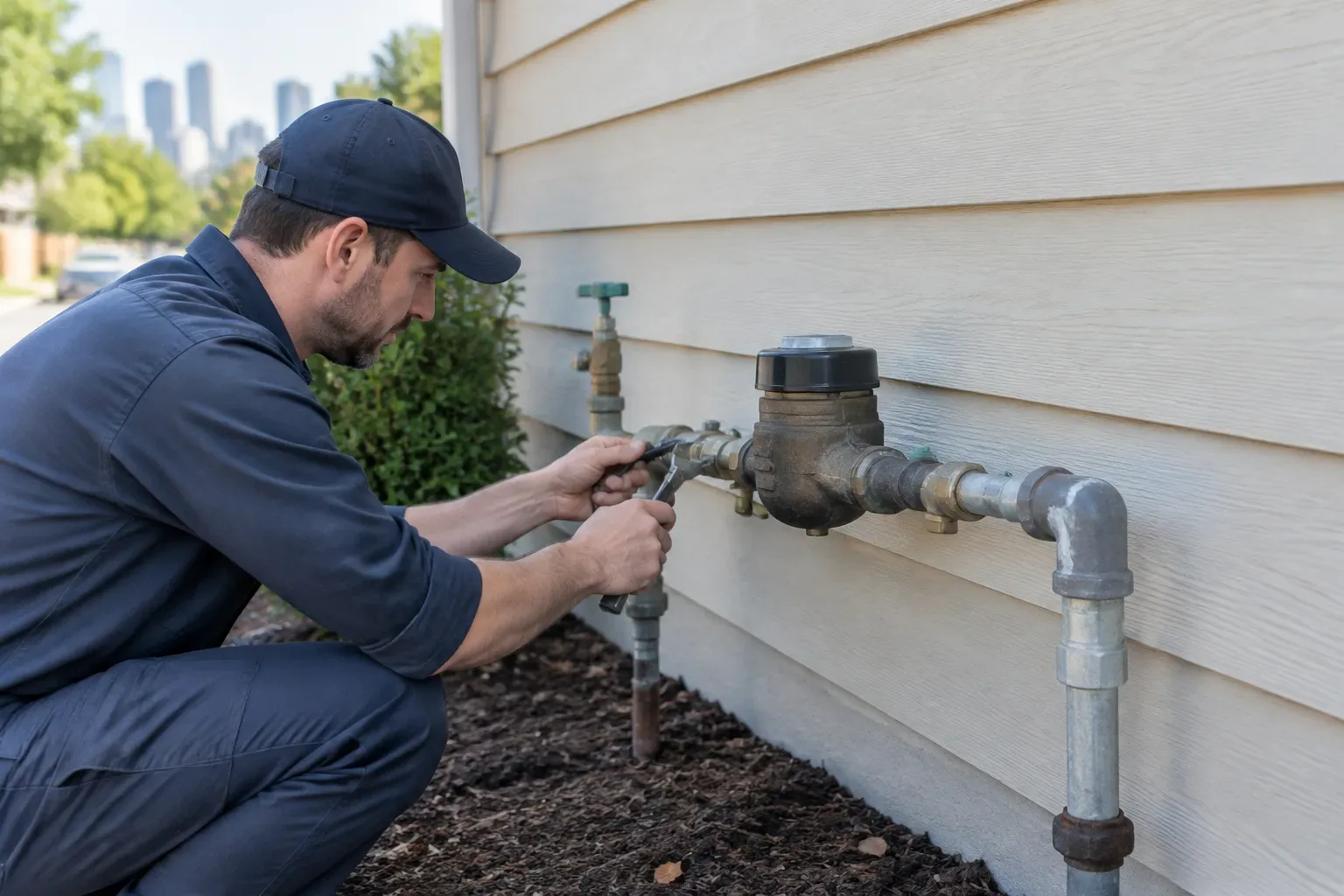
What Does Low Water Pressure Near Beechnut Mean in Meyerland?
Low water pressure near Beechnut can mean anything from a clogged faucet aerator to a restriction, leak, valve issue, pressure-regulating valve problem, or a utility-side change. The first useful distinction is scope: pressure that is weak at one fixture calls for a different check than pressure that falls throughout the property.
For Meyerland households, compare hot and cold water, indoor fixtures and an outdoor hose bib, and ask whether nearby properties are affected. Those observations do not prove the cause, but they help separate a fixture issue from a whole-property or neighborhood supply concern. Houston Plumbers Pro LLC can be a local starting point when the symptom needs a professional plumbing evaluation.
Quick Answer
Low pressure is a symptom, not a diagnosis. If it affects one faucet or shower, the problem may be local to that fixture. If it affects hot and cold water across the house, especially including an exterior hose bib, possible causes include a partially closed valve, a malfunctioning pressure-reducing valve, a restricted pipe or service line, a concealed leak, or a water-provider issue. Sudden loss of pressure with visible water, meter movement, or water sounds deserves prompt attention.
Is the low pressure at one fixture or throughout the property?
Start by mapping what you actually notice. “Low pressure” often describes low flow, but the two are not identical. A clogged screen can limit the amount of water leaving one faucet even when the incoming supply is otherwise normal. A restriction farther upstream may show up most clearly when several fixtures run at once.
One faucet or shower
A dirty aerator, mineral buildup, a clogged showerhead, a fixture cartridge, or a partly closed stop valve may be limiting that one outlet. Check the simple, accessible parts first.
One bathroom or one side of the house
A branch-line valve, localized piping restriction, or a plumbing change affecting that area becomes more plausible. Compare both hot and cold water before assuming the cause.
Hot water only
The water heater's isolation valve, hot-water piping, sediment-related restrictions, or fixture cartridges may need inspection. This does not automatically point to the cold-water supply or a neighborhood issue.
Every fixture, including outdoors
The main shutoff, pressure regulator, water service line, concealed leak, or utility supply should be considered. A pressure test under flow helps narrow the possibilities.
An established Southwest Houston home may have older piping, remodeled sections, or a mix of pipe ages. That history can matter, but pipe material and past work should be verified at the specific property rather than assumed from the neighborhood.
What can you safely check before scheduling service?
A few observations can make a pressure diagnosis faster without taking apart supply piping or adjusting specialized equipment.
- List every affected fixture and note whether the problem is on hot water, cold water, or both.
- Check whether the main shutoff and accessible fixture stop valves appear fully open. Do not force an old or seized valve.
- If only one faucet or shower is weak, remove and inspect its aerator or showerhead for debris, then reinstall it correctly.
- Test an accessible outdoor hose bib with a pressure gauge while no water is running, then observe what happens when another fixture runs.
- Ask a nearby neighbor whether their water pressure changed at the same time, particularly after visible utility work or a service interruption.
- Note recent plumbing repairs, meter work, irrigation use, unexplained water use, damp areas, or water sounds when all fixtures are off.
Static pressure is the reading with no water flowing. Pressure under flow is what happens while a shower, faucet, or appliance draws water. A normal-looking static reading followed by a sharp drop under flow can indicate a restriction, damaged or undersized piping, regulator trouble, or a supply limitation, but testing is needed to tell which.
Could a pressure-reducing valve be the cause?
Possibly, if the home has one. A pressure-reducing valve, also called a PRV, controls incoming water pressure before it moves through the building's plumbing. A faulty valve can contribute to low or inconsistent pressure, but a gauge reading alone does not confirm that the valve has failed. Watts' overview of reducing valves explains their basic role in controlling downstream pressure.
A plumber should inspect the valve, compare static and flowing pressure, verify valve positions, and rule out restrictions before recommending adjustment or replacement. Replacing a regulator will not correct a clogged aerator, a leaking buried line, or a provider-side issue.
When might a concealed leak or restricted water line be involved?
A whole-house pressure change paired with unexplained water use, continuous meter movement, moisture, or persistent water noise can raise concern for a leak. It is still only a possible cause until inspection confirms where water is going and whether the supply line is intact. The EPA's leak guidance also supports investigating suspected leaks rather than ignoring unexplained water use.
Ground movement in the Houston area can place stress on buried water-service piping or its connections. That makes a leak or restriction a reasonable diagnostic possibility, not a conclusion about any particular Meyerland property. Where testing supports a water-line issue, residential water-line and drainage installation may be the more relevant next conversation than repeatedly cleaning individual fixtures.
How do utility-side problems differ from property-side problems?
If neighbors report the same sudden change, or the timing matches utility work, a provider-side condition is more plausible. Contact the water provider for current interruption information before approving interior repairs. High irrigation demand during hot weather may make a supply change more noticeable, but it does not explain a persistent issue at only one property without testing.
If nearby homes are unaffected and your exterior hose bib is weak along with indoor fixtures, the focus shifts toward the property's meter connection, shutoff valves, regulator, or private water-service piping. A plumber can evaluate the property side without claiming that one symptom proves a particular defect.
What should businesses near Beechnut do about poor pressure?
For a commercial property, weak restroom fixtures, slow tank filling, or inadequate water delivery to multiple areas can disrupt daily operations. The same diagnostic order applies: establish whether the condition is fixture-specific, building-wide, or shared with nearby properties, then inspect valves, supply piping, and pressure control equipment as appropriate. Businesses planning repairs or changes to water piping can review commercial installation of new water lines and drainage for related service context.
Water pressure is separate from a gas-system concern. If a gas odor, suspected gas leak, or damaged gas piping is present, do not treat it as part of a low-water-pressure diagnosis. Review the dedicated commercial gas leak repair information and follow appropriate safety directions from the gas provider or emergency services.
When should low water pressure be treated as urgent?
Move beyond routine troubleshooting when the pressure loss is sudden and substantial, water is visible indoors or outdoors, a pipe is making unusual sounds, the meter indicates water use while everything is off, or the property has little to no water. These signs can point to an active leak or a supply failure that needs timely evaluation.
Do not open a buried line, remove a meter component, or keep using plumbing that appears to be feeding an active leak. If the immediate issue is stable but unresolved, record the affected fixtures, hot-versus-cold pattern, gauge observations, timing, and any recent work. That information gives a plumber a useful starting point.
The practical takeaway is simple: isolate the pattern before selecting the repair. A cleaned aerator may solve one weak faucet, while a whole-property pressure drop needs a broader supply and leak assessment.
Ready to discuss your project?
If pressure is weak across your Meyerland property, request a focused plumbing assessment before choosing a repair.
FAQ
Why is my water pressure low at only one faucet?
A single weak faucet usually points to a local restriction, such as debris in the aerator, buildup in the faucet, a worn cartridge, or a partly closed fixture stop valve. Compare hot and cold water at that faucet and test another nearby fixture. If both are weak only in one area, the issue may be farther back in the branch piping rather than inside the faucet itself.
Why did my water pressure drop after plumbing work?
Debris disturbed during repairs can collect in aerators, showerheads, cartridges, or valves. A valve may also have been left partly closed, although that should be verified rather than assumed. Note exactly which fixtures changed and whether the loss is on hot water, cold water, or both. Those details help distinguish a fixture cleanup from a larger supply-side concern.
Can a hidden leak cause low water pressure?
Yes, a concealed leak can contribute to pressure loss, especially if water is escaping from a supply line. It is not the only explanation. Check for unexplained meter movement, damp areas, moisture at walls or floors, continued water sounds, and unusual water use. For more related troubleshooting topics, visit the Houston Plumbers Pro plumbing blog.
Is low hot-water pressure always a water heater problem?
No. Weak hot water can come from a partially closed water-heater isolation valve, restrictions in hot-water piping, a faucet cartridge, or sediment-related limitations. If cold water is strong at the same fixture, that comparison is useful evidence. A plumber should inspect the hot-water path rather than replacing a water heater based on pressure symptoms alone.
Should I test water pressure at an outdoor hose bib?
An accessible hose bib is a useful test point because it can help show whether the issue reaches the property’s general supply, rather than only one indoor fixture. Test with no water running, then observe the reading while another fixture flows. The result is diagnostic information, not a final diagnosis, because restrictions and valve problems can affect readings differently.
What if my neighbors also have low water pressure?
A shared timing pattern makes a water-provider issue, utility work, or a broader supply condition more likely than an isolated plumbing defect inside your home. Ask whether the change began at the same time and contact the provider for service updates. If neighbors are unaffected, your property's shutoff, regulator, meter connection, or water line deserves closer evaluation.
Can old or mixed-age pipes reduce water flow?
They can. Internal corrosion, mineral scale, old galvanized piping, and poorly planned connections may restrict water movement over time. A remodel can also leave different pipe materials or valve conditions in separate areas. The proper response depends on inspection findings. In some cases a targeted repair is enough; in others, water-line work may be considered after the restricted section is identified.
When should I have a plumber inspect low pressure in Meyerland?
Arrange an inspection when low pressure affects several fixtures, persists after simple fixture checks, follows no known utility event, or appears with leak indicators. Sudden pressure loss, visible water, or no water at all calls for faster attention. Bring notes on affected locations, hot and cold performance, any gauge results, and recent plumbing or utility work so the diagnosis can start with the right evidence.
