What Causes Slab Leak Warning Signs Near Beechnut in Braeburn?
Slab leak warning signs can result from a pressurized water line leaking beneath a concrete foundation, but a damp floor, musty smell, high water bill, or cracking can also come from drainage leaks, condensation, irrigation, stormwater, appliance leaks, or foundation movement. The useful first step is to identify what you can observe, then confirm the source through testing rather than assuming one symptom proves an under-slab pipe failure.
For properties near Beechnut in Braeburn, a warm patch on the floor, a water meter that moves while water is off, or unexplained moisture deserves prompt attention. Houston Plumbers Pro LLC can help residents and businesses evaluate suspected hidden plumbing leaks without treating a visible wet spot as a diagnosis by itself.
Quick Answer
The most concerning slab-leak pattern is continuous water loss with no fixture in use, often paired with a rising bill, reduced water pressure, running-water sounds, warm or damp flooring, or moisture appearing near the slab edge. Common underlying causes include corrosion or damage in a buried supply pipe, stressed connections, or aging pipe material. A drain-line defect can also create moisture, but it usually appears when a fixture drains rather than continuously.
Before approving floor removal or a major repair, a plumber should narrow down whether the issue is a pressurized supply line, a drain line, or moisture from a non-plumbing source.
Which warning signs deserve attention?
No single sign confirms a pipe leak below concrete. Several clues occurring together are more meaningful, especially if they persist after normal cleaning, rain, or appliance use.
- A water bill or water use pattern that rises without an obvious reason.
- A water meter that continues to register flow after fixtures, appliances, and irrigation are off.
- A persistent warm, damp, or discolored area on flooring.
- Hissing, rushing, or running-water sounds when plumbing fixtures are not operating.
- Lower water pressure at several fixtures.
- Flooring that lifts, separates, warps, or develops recurring moisture damage.
- Musty odors or recurring mildew where ordinary surface spills are unlikely.
- Water collecting near the foundation or at a nearby low point without a clear rain or irrigation explanation.
The Environmental Protection Agency notes that unexplained water use can signal household leaks and merits investigation through EPA WaterSense leak guidance. A bill alone still does not identify where water is escaping.
Is it a slab leak, a drain problem, or another moisture source?
A pressure-side supply leak loses water whenever the line is pressurized, even if no one is using a faucet. A drain-line issue often shows up after a shower, laundry cycle, dishwasher discharge, or toilet flush. Moisture unrelated to plumbing can look similar, particularly in Houston's humid conditions.
| Possible source | What someone may notice | What helps separate it from a slab leak |
|---|---|---|
| Pressurized water-line leak | Meter movement with all water use stopped, ongoing water loss, warm floor if a hot-water line is involved | Fixture isolation and pressure testing can help confirm a supply-side loss |
| Drain-line leak | Dampness or odor that appears after water is discharged | The timing often tracks fixture use rather than continuous meter movement |
| Condensation, stormwater, irrigation, or appliance leak | Damp flooring, surface moisture, or water near an exterior wall or appliance | Drainage patterns, weather, appliance checks, and meter behavior help rule sources in or out |
| Soil or foundation movement | Cracks, sticking doors, or uneven areas | These conditions need separate evaluation and do not prove plumbing water loss |
A warm floor spot can be more consistent with a hot-water-line leak. A cold or damp spot could involve a cold-water line, a drain leak, condensation, groundwater, or another source. Temperature is a clue, not proof.
What can cause a pipe beneath a slab to leak?
Buried plumbing can fail for different reasons. Pipe material condition, joint wear, installation details, water chemistry, and physical stress all matter. The finding that matters is the condition of the actual line, not a guess based on the neighborhood or the appearance of the floor.
In the Houston area, cycles of wet and dry weather can change soil moisture around foundations. Expansive and shrink-swell clay can contribute to movement that stresses rigid or aging plumbing connections. That does not mean a crack or sticking door is caused by a slab leak. It means pressure testing and water-loss investigation should come before attributing foundation symptoms to plumbing. The USGS overview of land subsidence also illustrates why ground-movement questions and plumbing diagnoses should not be treated as the same issue.
For concealed plumbing below a slab, the moisture may emerge well away from the actual failed fitting or pipe section. That is why a targeted investigation is usually more useful than cutting into the first visible wet area.
How can you check for hidden water loss before a plumber arrives?
A simple meter check can provide useful information, as long as it is done safely and interpreted carefully. Automatic ice makers, water softeners, irrigation systems, pool fillers, and leaking toilets can create intermittent water use that looks like a hidden leak.
- Stop intentional water use inside and outside the property. Confirm that faucets are off and that no appliance is actively filling or draining.
- Check toilets for running or refilling behavior, and pause irrigation or other automatic water-using equipment if possible.
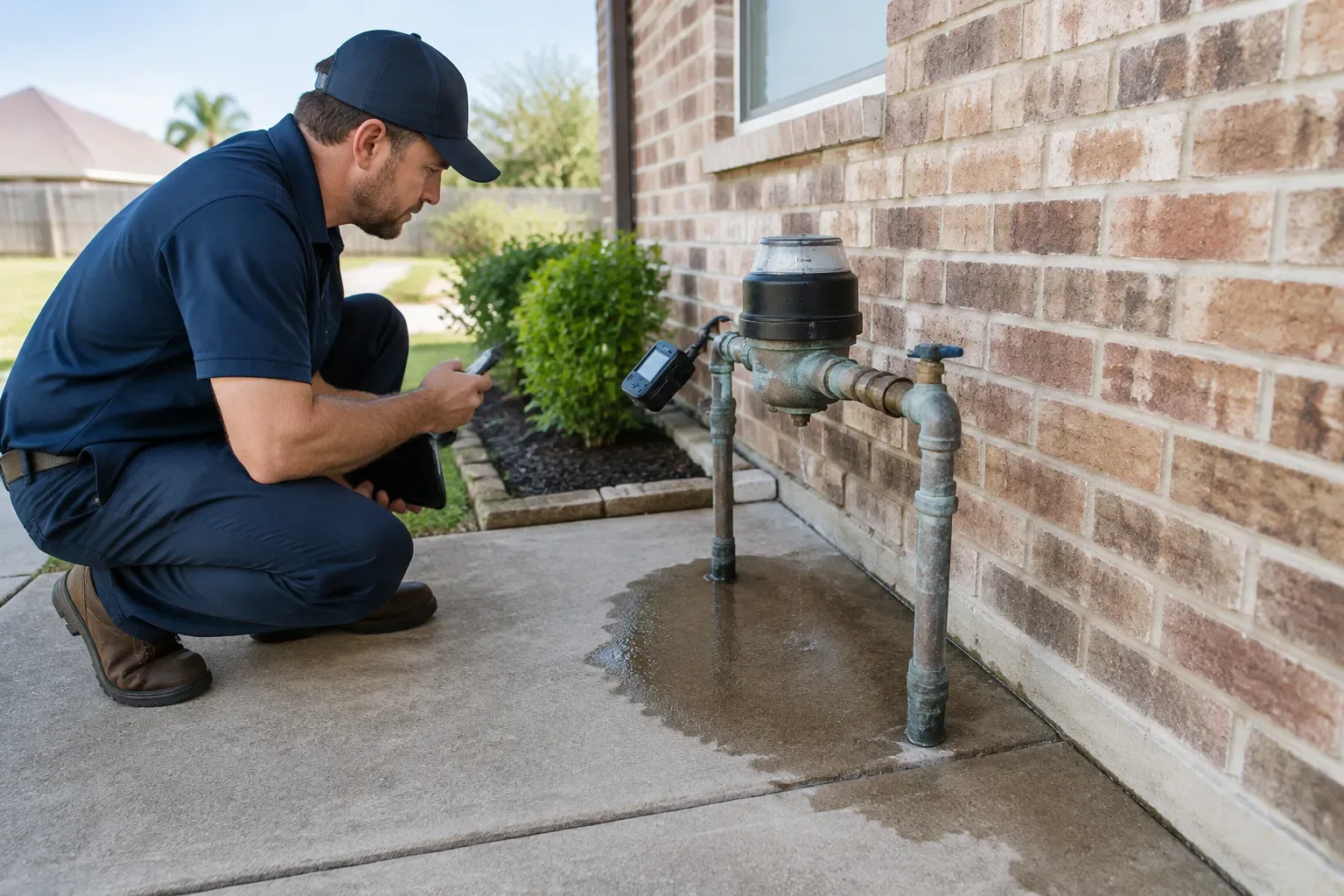
- Locate the water meter, note the low-flow indicator or meter reading, and wait without using water.
- Recheck the meter. Continued movement supports the possibility of active water loss, but it does not reveal the source or exact location.
- Photograph damp areas, flooring changes, meter readings, and the time of day the issue appears. This record helps a plumber investigate efficiently.
If water is spreading quickly, threatening electrical equipment, damaging flooring, or cannot be stopped, turn off the main water supply if you can safely identify the correct shutoff. The valve location varies by property. For active damage that needs immediate attention, use the emergency plumbing service page to review the available service path.
How do professionals locate a suspected under-slab leak?
A proper investigation begins by checking simpler possibilities, such as toilets, fixture connections, visible supply lines, appliances, and exterior water sources. After that, the plumber may isolate parts of the system and test for pressure loss. Acoustic listening equipment, thermal inspection, and other non-destructive methods can sometimes help narrow the area for access.
These tools are not interchangeable guarantees. Thermal methods are most useful when there is a meaningful temperature difference, while acoustic methods can be affected by pipe depth, noise, materials, and water flow. The practical goal is to reduce unnecessary demolition and identify a repair approach supported by findings.
For a suspected residential hidden water leak, the residential leak repair service is the relevant starting point. Businesses with possible concealed water loss can review commercial leak repair options, especially where water use affects restrooms, operations, or occupied spaces.
What repair paths might follow a confirmed leak?
The right repair depends on the confirmed pipe condition, access, layout, and whether the problem appears isolated or part of a broader pipe-system concern. A larger repair is not automatically better, and a small spot repair is not always the durable choice.
Localized access and repair
A plumber accesses the confirmed area and repairs the failed portion. This can make sense when the issue is isolated and the access path is reasonable.
Rerouting a line
A new route bypasses the under-slab section instead of opening the slab at the failure point. It may be considered when direct access is disruptive or the affected route is a concern.
Replacing a larger section
A broader replacement can be evaluated if inspection suggests repeated failures or widespread pipe deterioration. The decision should follow evidence about the system, not fear caused by one symptom.
If a water-line reroute or related piping work is being considered, new residential water line and drainage installation provides a related service reference. Ask how the leak was confirmed, why the proposed access point or route was chosen, and what alternative repair paths were considered before authorizing work.
When should suspected slab leakage be treated as urgent?
Move quickly when water is actively spreading, the floor is deteriorating, electrical hazards are possible, or the main supply cannot be controlled. Sewage odors or contamination require a different level of caution because drain or sewer problems can create health and cleanup concerns. A suspected gas smell is also separate from a water-line issue: leave the area and follow appropriate gas-safety guidance rather than attempting to investigate it yourself.
Texas regulates plumbing work through state licensing requirements. If you are hiring for concealed-pipe diagnosis or repair, verify that the provider is appropriately qualified for the work through the Texas Department of Licensing and Regulation plumbing information.
For non-emergency but persistent symptoms near Beechnut, the Braeburn plumbing services page offers a local route to arrange an assessment. The most common mistake is waiting until flooring damage or water loss becomes obvious. Documenting the clues early gives the inspection a better starting point.
What is the practical next step?
Treat persistent moisture and unexplained meter movement as a reason to investigate, not as proof of a specific repair. Confirm the source first, then choose the least disruptive repair path that fits the actual plumbing findings.
Ready to discuss your project?
If you are seeing persistent moisture or unexplained meter movement near Beechnut, request an assessment before approving floor or slab access.
FAQ
What are the first signs of a slab leak?
Early signs can include unexplained water use, a meter that moves when fixtures are off, soft or warm floor areas, lower pressure, sounds of running water, or recurring moisture damage. One sign may have an ordinary explanation, such as a running toilet or appliance issue. Two or more persistent clues, especially continuous meter movement, justify a plumbing evaluation.
Can a warm floor mean there is a hot-water slab leak?
It can be a useful clue because a leaking hot-water line can warm nearby flooring. It is not conclusive. Heated floors, sun exposure, HVAC conditions, and other heat sources can affect floor temperature. A professional should compare the warm area with pressure behavior and the plumbing layout before deciding whether a concealed hot-water line is responsible.
Why is my water bill high when I cannot see a leak?
Water may be escaping beneath flooring, inside walls, through a running toilet, or at an exterior line where it is not obvious. Compare the bill with meter behavior when all known water use is paused. The Houston Plumbers Pro blog has additional plumbing guidance, but a continuous meter reading still needs a source-specific inspection.
Will a slab leak always lower water pressure?
No. A small supply-side leak may not create a noticeable pressure change, particularly if the plumbing system is otherwise delivering adequate flow. Pressure can also fall for unrelated reasons, including fixture restrictions, valve problems, or water-supply issues. Pressure changes are one observation to report, not a reliable stand-alone diagnosis.
Can a slab leak cause foundation cracks?
A plumbing leak may affect soil moisture, but cracks can also result from soil movement, normal material behavior, structural conditions, or other water sources. Do not assume plumbing is the cause of a crack without confirming water loss. If there is an active meter indication plus cracking or floor movement, arrange plumbing testing and seek separate structural guidance when warranted.
Should I shut off my water if I think there is a leak under the slab?
Shut off the main supply if water is actively spreading, damage is worsening, or you cannot control the flow through a fixture shutoff. If symptoms are mild and there is no active damage, document the meter behavior and moisture pattern while arranging an inspection. Avoid repeatedly turning valves if one is damaged or difficult to operate.
Does a slab leak always require breaking concrete?
No. Direct slab access is one repair route, but it is not the only one. Once the problem is confirmed and narrowed down, a plumber may recommend a localized repair, a reroute, or a replacement section based on access and pipe condition. The key is to avoid approving demolition before the source and likely repair area are supported by testing.
What should I tell a plumber about suspected hidden leakage?
Share when the moisture appears, whether the floor feels warm or only damp, recent meter readings, changes in water bills or pressure, fixture use that triggers the issue, and any exterior water sources nearby. Photos and a short timeline are helpful. Clear observations help distinguish a continuous supply leak from a drain-related or environmental moisture problem.
