Should Older Slab Homes Near Beechnut in Braeburn Replace Water Lines?
Not automatically. An older slab home near Beechnut should replace water lines when testing and repair history point to a broader problem, not simply because the house is older or has a slab foundation. One isolated, accessible leak may be a good candidate for a targeted repair. Repeated leaks, failing tests, widespread pipe deterioration, or difficult under-slab access can make rerouting or broader repiping the more sensible long-term choice.
The first job is locating the problem accurately. A hidden water loss can originate in a line beneath the slab, an interior branch line, or the service line between the meter and the house. Those are different systems with different repair scopes.
Quick Answer
Replace buried or under-slab water lines when there is evidence that the system is failing beyond one manageable spot. Strong reasons to consider a larger project include repeated leaks, multiple weak areas, poor pressure or isolation-test results, visible deterioration in accessible piping, and a repair route that would require repeated slab excavation.
If testing identifies one contained defect and the remaining lines appear sound, a localized repair may be enough. Start with professional leak detection and a written scope, then compare the disruption and future risk of repairing, rerouting, or repiping.
What signs suggest a water line may be leaking under the slab?
Symptoms are clues, not proof. Watch for unexplained water-meter movement while all fixtures are off, a persistent sound of water running, warm or damp floor areas, new moisture near the foundation, low water pressure, discolored water, or cracked and lifted flooring.
Each symptom has more than one possible explanation. Low pressure, for example, can come from a fixture problem, a valve issue, a water-service problem, or internal piping. Damp flooring could reflect a plumbing leak, but it could also involve a drainage, appliance, roofing, or foundation-related moisture issue. Only inspection can confirm the source.
For a suspected hidden leak, Houston Plumbers Pro LLC can be a starting point for evaluating the affected line rather than assuming the entire system needs replacement.
Why does slab access change the repair decision?
Supply piping beneath a concrete slab can be difficult to reach without opening concrete and, in some cases, disturbing flooring or cabinets. That access challenge does not mean the slab must always be broken. Depending on the confirmed location and pipe layout, a plumber may be able to route a replacement line through walls, ceilings, or another accessible path.
Houston-area wet and dry cycles can change soil moisture around foundations. That movement may place stress on aging or rigid pipe joints, but it does not prove that soil movement caused a specific leak or that a full replacement is required. The useful question is whether leaks recur, where they occur, and what testing shows about the remaining system.
Should you repair one leak, reroute a line, or repipe the house?
These options solve different problems. The right choice depends on the failed line, the condition of other accessible piping, prior repairs, and how much finish restoration each route requires.
Localized repair
The plumber accesses and repairs the confirmed damaged section. This is often reasonable for a first, isolated failure when testing does not indicate wider deterioration.
Reroute the affected line
A replacement line is run through a more accessible route, avoiding some or all slab excavation. The old segment should be properly disconnected or capped as part of a clear scope.
Whole-house repipe
Multiple interior distribution lines are replaced when failures are recurring, accessible piping shows broad degradation, or continued spot repairs are likely to be disruptive and uneconomical.
A repipe is not automatically the best choice after one leak. Conversely, repeatedly opening different slab locations without assessing the entire system can turn a sequence of small repairs into a larger disruption. For details on new-line routing and installation, review the company's residential water-line and drainage installation service.
How can a plumber confirm where the hidden leak is?
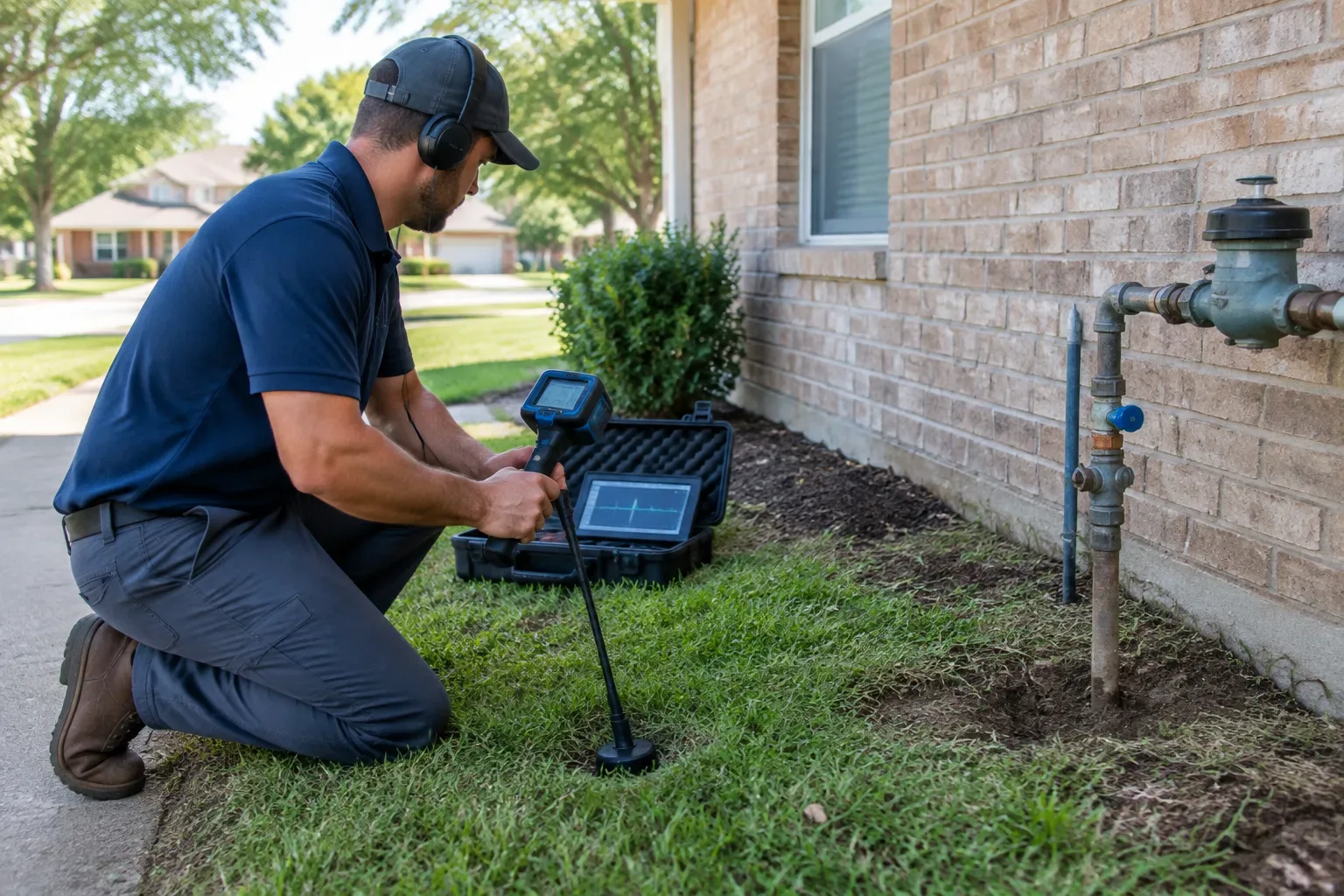
A dependable diagnosis separates an observed symptom from the actual failed component. A plumber may review the water meter, isolate portions of the plumbing, perform pressure testing where appropriate, inspect accessible pipes, and use acoustic or electronic leak-location tools. Hot-water and cold-water lines may be tested separately because they can require different repair approaches.
The inspection should also distinguish an interior distribution-line leak from a customer-side service-line problem between the meter and the home. A drain-line issue is different again. Replacing a supply line will not correct a drain failure, and a service-line repair may not address an interior under-slab leak. Residential leak repair information can help clarify the type of plumbing issue being investigated.
What should a written water-line replacement scope include?
A useful estimate should let you compare approaches without guessing what is included. Ask for the following in writing:
- The confirmed or suspected affected line, such as hot water, cold water, service line, or drain line
- The proposed access route and whether slab excavation, wall access, or rerouting is planned
- Replacement material and where it will be installed
- Testing to be completed before and after the work
- Whether old lines will be disconnected or capped
- Permit and inspection responsibilities for the property's jurisdiction
- Work that is included in the plumbing scope versus restoration of flooring, drywall, cabinets, concrete, paint, or landscaping
- Warranty terms for labor and parts
Permit and inspection requirements depend on the exact location and project scope, so confirm them with the authority having jurisdiction before work begins. It is also sensible to verify the plumber's licensing through the Texas State Board of Plumbing Examiners.
Does older pipe material mean it should be replaced?
Not by itself. Pipe material should be identified through inspection of accessible areas and project records when available, not guessed from a home's age or neighborhood. A professional can look for corrosion, prior repair patterns, damaged joints, and signs that the accessible portions are no longer reliable.
If a service line or plumbing components raise questions about lead-related drinking-water exposure, material identification matters. The EPA's Lead and Copper Rule information explains why service-line and plumbing materials may need evaluation. That concern should be assessed specifically, rather than assuming every older line has the same risk.
What is the most practical next step for a Braeburn slab home?
Document the evidence before choosing a repair scope. Note meter behavior, pressure changes, damp or warm areas, prior leak locations, and any recent changes after wet or dry conditions. Then request testing that identifies the line and its route as clearly as possible.
For homes near Beechnut, plumbing services in Braeburn can provide a local route to discuss inspection and a written estimate. The practical takeaway is simple: replace the amount of piping that the evidence supports, not automatically the largest possible scope.
Ready to discuss your project?
Request a water-line assessment for your Braeburn slab home before deciding between a spot repair, reroute, or repipe.
FAQ
Is one slab leak enough reason to repipe an older house?
Usually, no. One confirmed leak may justify a targeted repair, particularly if the rest of the accessible piping appears sound and testing does not reveal additional concerns. A broader repipe becomes more compelling with repeated failures, visible widespread deterioration, poor test results, or a repair history that shows new leaks occurring in hard-to-reach locations. The route and restoration burden matter as much as the leak count.
Can water lines be rerouted without breaking the slab?
Often, an affected supply line can be routed through walls, ceilings, or other accessible spaces, but feasibility depends on the home's layout and the line being replaced. Rerouting may reduce concrete and flooring disturbance, though it can require drywall access and patching. A site inspection should identify the route, materials, testing plan, and which finish repairs are outside the plumbing scope.
How do I know if the leak is under the slab or between the meter and house?
Meter checks and line isolation can help separate a customer-side service-line issue from an interior distribution-line issue. The meter-to-house segment and the plumbing under a slab are not interchangeable repair scopes. A plumber should identify where pressure is being lost before recommending excavation or repiping. This distinction also helps clarify who is responsible for the affected segment.
Will replacing under-slab water lines damage my floors?
It can, if direct slab access is necessary. The amount of disruption depends on the confirmed leak location, flooring type, cabinet placement, and whether rerouting is viable. Ask the estimator to state exactly where access openings may be needed and who handles concrete, tile, flooring, cabinetry, drywall, or paint restoration. Do not assume those non-plumbing repairs are included.
What should I do if I hear water running but nothing is on?
First, check that toilets, faucets, irrigation, and appliances are not actively using water. If the sound persists or the meter continues moving with fixtures off, treat it as a possible hidden leak and arrange diagnosis. If water loss appears active, shut off the home supply when practical. For guidance on urgent plumbing situations, see the site's emergency plumbing page.
Are old pipes automatically unsafe for drinking water?
No. Age alone does not identify pipe material, condition, or drinking-water risk. A proper evaluation starts by identifying accessible plumbing and service-line materials, then considering condition and any relevant test results. If you are comparing replacement options or researching plumbing concerns, the Houston Plumbers Pro blog offers additional service-related information, but material-specific concerns should be evaluated for the individual property.
