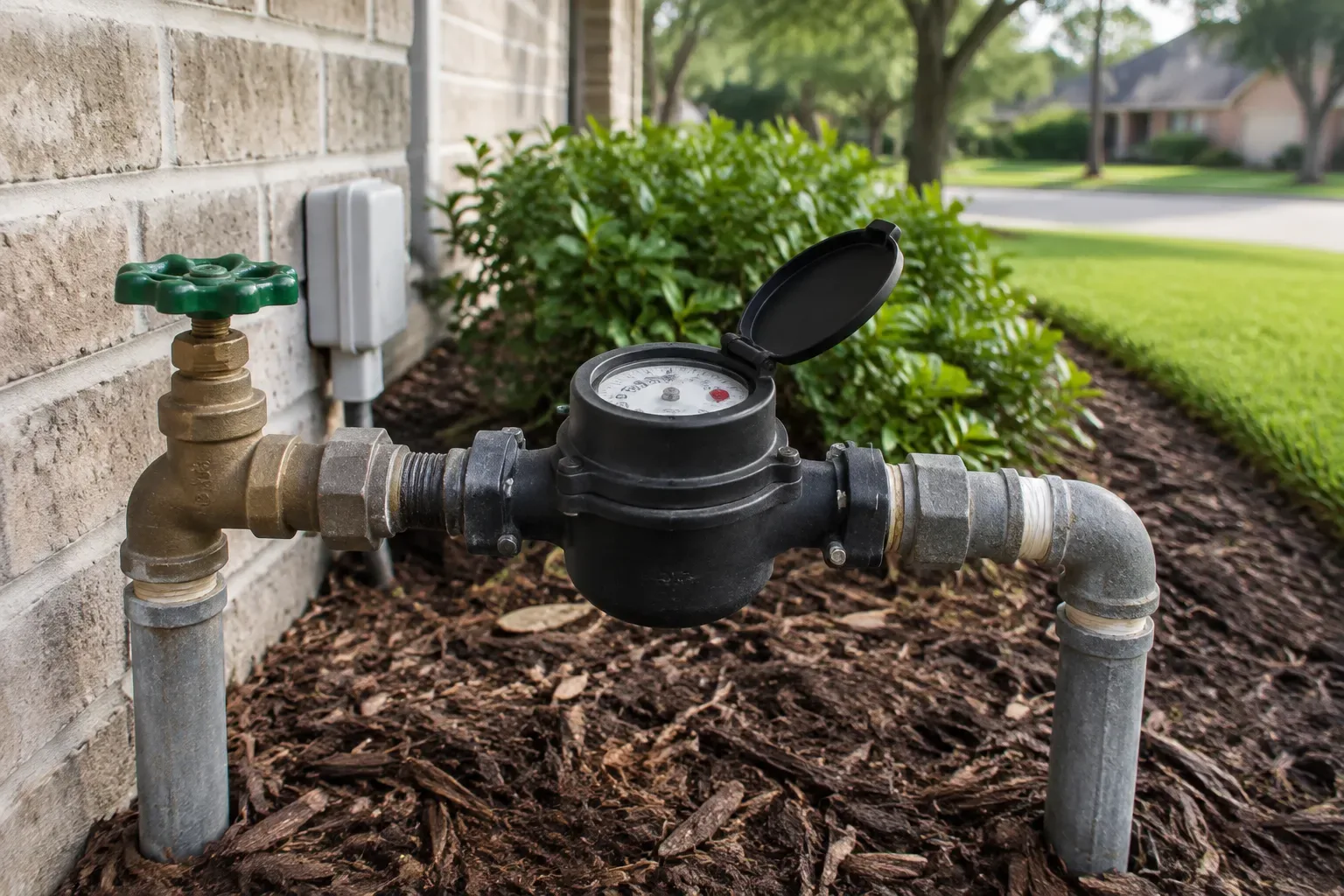
Why Does My Water Bill Rise Near Fondren in Braeburn Valley?
A higher water bill near Fondren or Braeburn Valley usually comes from either more recorded water use or a problem that is allowing water to run unnoticed. Common explanations include irrigation during hot, dry weather, a running toilet, a dripping outdoor fixture, a hidden supply-line leak, or a billing and meter-reading issue. The bill alone cannot prove which one it is.
Start by comparing the billed usage and billing dates, then check whether your meter moves while all water is off. If it does, a leak on the private plumbing system becomes more likely and a professional inspection may be appropriate. For local help with suspected plumbing leaks, Houston Plumbers Pro LLC serves Southwest Houston.
Quick Answer
Check the bill for the number of service days, consumption amount, meter reading type, and account address before assuming there is a broken pipe. Then shut off all known water use, including irrigation, and watch the meter. Continued meter movement can indicate water is being used somewhere on the property, but it does not identify the location or cause by itself.
A silent toilet leak or irrigation schedule is often easier to find than a concealed pipe issue. If the meter is still registering use and no fixture explains it, document the reading and time, then arrange leak detection. If the bill or meter information itself looks inconsistent, contact the water provider as well.
What can make a water bill increase without a visible leak?
Not every increase means a pipe has failed. A dollar total can rise because of a different number of billing days or changed rates, so compare the number of gallons or units used across several bills rather than comparing only the amount due.
Houston's hot climate can increase outdoor watering during dry stretches. Review irrigation timers, hose use, pool filling, recent guests, extra laundry, construction activity, and water-softener regeneration cycles. These are observable usage changes, not plumbing failures.
Seasonal or outdoor use
An irrigation controller, hose bib, pool fill, or more frequent landscape watering can add substantial use without leaving indoor water damage.
Fixture leak
A toilet that refills on its own, a faucet drip, or a leaking appliance connection can waste water while remaining easy to miss during a normal walk-through.
Concealed plumbing leak
Leaks in a wall, under a slab, or on a buried private service line may produce no obvious puddle at first. Meter movement and changes in moisture or pressure are clues, not confirmation.
Billing or meter question
An estimated reading, an incorrect account detail, or a reading that does not fit your prior consumption history needs review by the water provider, not just a plumbing repair.
The EPA notes that household leaks can waste significant water and recommends checking toilets, faucets, and outdoor fixtures as common starting points. See its household leak guidance for additional leak-checking advice.
How do you check the meter and fixtures safely?
The meter test is a screening step. It can show that water is passing through the meter after known uses are shut down, but a plumber must isolate parts of the system to determine whether the source is a toilet, interior pipe, buried line, or another component.
- Compare the current bill with several prior bills. Check billed days, consumption, actual versus estimated meter reading, service address, and the date the increase began.
- Turn off faucets, appliances using water, ice makers if practical, irrigation, and other planned water use. Do not run laundry or showers during the test.
- Record the meter reading and time, then observe whether the leak indicator or register changes. Follow the water provider's instructions for your particular meter if they are available.
- Check toilets by placing a small amount of food coloring in each tank. If color reaches the bowl without flushing, that toilet may be leaking. Do not leave dye sitting in the tank for an extended period.
- Inspect under sinks, around water-heater connections, exposed supply lines, faucets, hose bibs, and appliance connections for drips or moisture.
- If the meter continues to move with water use off, save the reading, time, bill, and observations for a plumbing inspection and any utility review.
A drain clog generally does not cause continuous meter movement because it restricts wastewater leaving the home rather than bringing fresh water in. If the concern is a damaged or aging private water line, residential water-line and drainage installation may be relevant after the source has been properly identified. Installation is not the first answer to every high bill.
Which symptoms point to a hidden plumbing leak?
Look for patterns that support further investigation: a water meter that moves during a no-use test, unexplained wet soil, unusually lush patches of vegetation, standing water, damp flooring, musty odors, warm areas on a floor, wall or ceiling staining, lower water pressure, or the sound of water running when fixtures are off.
Each is a symptom, not a diagnosis. Wet ground could be irrigation runoff. A warm floor can have more than one explanation. A persistent pressure change may involve a plumbing issue but requires inspection to locate and confirm the cause.
Houston-area ground movement and expansive clay soils can place stress on underground service piping or plumbing near a slab. That does not mean a particular Fondren or Braeburn Valley property has a slab leak. It means unexplained meter movement combined with moisture near the foundation, pressure loss, or wet ground is a sensible reason to consider professional leak detection.
For a suspected hidden leak on a home plumbing system, residential leak repair information explains the related service scope. A qualified inspection can include isolating fixtures and sections of piping, pressure testing where appropriate, and selecting detection methods based on the suspected location.
When should you call a plumber, and when should you call the water provider?
Call a plumber when you have active water escaping, continued meter movement after all known water uses are off, signs of moisture or damage, a toilet or fixture that will not stop running, or recurring pressure changes. Turn off the home's main water supply first when practical and safe if a leak is actively causing damage.
Contact the water provider when the account address, billing period, meter-reading status, or recorded consumption appears wrong or inconsistent with the meter and your household history. A plumber can investigate plumbing on the private side of the system. The utility must address account, meter, and public-side concerns.
Commercial properties have an added reason to act quickly because restrooms, irrigation, tenant spaces, and equipment can make water use harder to trace. If an investigation identifies a need for new private water or drainage infrastructure, review commercial water-line and drainage installation options after a clear diagnosis. A higher bill alone is not a reason to replace a line.
If you smell gas, hear a gas leak, or suspect gas equipment is involved, treat that as a separate safety issue rather than part of a water-bill investigation. Do not try to inspect or repair gas equipment yourself. Businesses can review the company's commercial gas leak repair service for the appropriate service path.
What should you document before requesting leak detection?
Good notes reduce guesswork. Keep the current and recent bills, dates and readings from your meter test, whether the reading was actual or estimated, the date the increase began, irrigation schedule changes, and a list of visible moisture or fixture observations. Include any changes in water pressure and whether you have already tested toilets.
That information helps separate normal consumption from a possible plumbing issue. It can also be useful if you ask the water provider to review the bill. A bill adjustment is never automatic, and any decision depends on the provider's policy and the documentation it requires.
For broader maintenance and troubleshooting topics, visit the Houston plumbing blog. The practical takeaway is simple: verify the usage first, test the meter under controlled conditions, then escalate based on evidence rather than guessing at a major repair.
Ready to discuss your project?
If your meter keeps moving after water use is shut off, request an inspection for your Fondren or Braeburn Valley property.
FAQ
Why did my water bill double but I cannot find a leak?
A concealed leak is possible, but it is not the only explanation. First compare billed consumption, the number of billing days, and whether the reading was actual or estimated. Then check irrigation, toilets, appliance connections, and meter movement during a no-use period. If the meter is stable, a billing or usage change may be more likely than a continuous plumbing leak.
Can a running toilet really raise my water bill?
Yes. A toilet can leak silently from the tank into the bowl and refill repeatedly, even when no one is using it. A simple food-color test can reveal this: color added to the tank should not appear in the bowl without flushing. If the toilet is the source, residential toilet repair guidance can help you understand the related repair service.
How long should I watch my water meter for a leak test?
Use a period when everyone can avoid showers, laundry, irrigation, dishwashing, and other water use. Record the reading and time, then check whether it changes while those uses remain off. The useful result is not a universal number of minutes but a controlled test with no intentional water demand. Document exactly what was shut off and when.
Could outdoor watering be the reason my bill went up in Houston?
Yes. Hot, dry conditions can lead to more frequent irrigation and hose use, which can raise consumption without an indoor leak. Check controller schedules, recent manual watering, broken sprinkler heads, wet zones, and hose bibs. If outdoor use does not explain the increase and the meter moves with irrigation off, further leak investigation is reasonable.
Does a high water bill mean I have a slab leak?
No. A high bill is an observable billing result, not proof of a slab leak. Toilets, faucets, irrigation, buried service lines, and billing issues can produce a similar result. A slab-adjacent or under-slab issue becomes more plausible when meter movement is paired with clues such as persistent warm flooring, foundation-area moisture, pressure changes, or unexplained water sounds.
Can a clogged drain make my water bill higher?
Usually no. A clogged drain affects wastewater flow and may cause slow draining or backups, but it does not normally create fresh-water use that turns the meter. A clog and a water leak can occur at the same time, so address backup or overflow symptoms separately. The plumbing blog has additional articles for common plumbing problems.
What if the meter moves after I shut everything off?
Continued movement suggests that water may be passing through the meter despite no known use. Recheck that irrigation, appliances, and fixtures are actually off, then record the reading and time. If movement continues, arrange a professional inspection to isolate the source. Also keep your records for a water-provider review if the bill or meter data remains questionable.
Is a sudden high water bill an emergency?
It can be, especially if there is active flooding, water near electrical equipment, rapidly spreading staining, or a major pressure loss. Shut off the main water supply if it is safe to do so and seek plumbing help. A bill increase without active damage still deserves timely investigation, but it is not automatically an emergency. Houston Plumbers Pro LLC offers emergency plumbing service for urgent plumbing situations.
