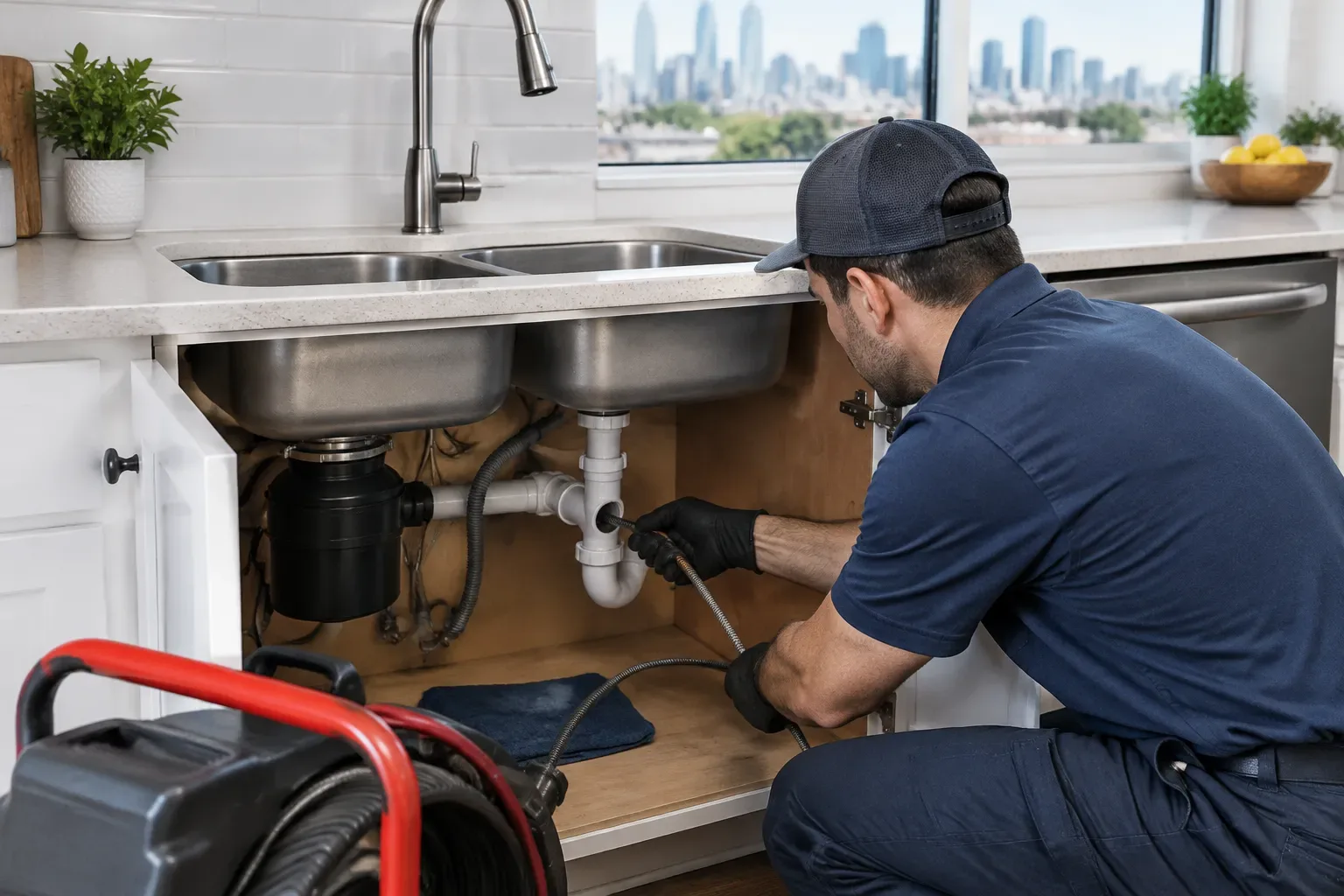
Why Does the Kitchen Drain Back Up Near Beechnut in Gulfton?
A kitchen drain that repeatedly backs up near Beechnut in Gulfton usually has a restriction somewhere beyond the visible sink opening. Grease and food buildup, an incompletely cleared clog, a disposal or dishwasher connection issue, or a blockage farther down the kitchen branch drain are all possible causes. The address alone cannot identify the cause, so the pattern of affected fixtures matters.
If water rises again soon after plunging, stop adding water and look for clues such as cross-flow between sink bowls, dishwasher drainage problems, or backups at other fixtures. Houston Plumbers Pro LLC can help homeowners and businesses sort out whether the issue is isolated to the sink or needs broader drain-line diagnosis.
Quick Answer
A recurring kitchen backup is not automatically a main sewer problem. If only the kitchen sink is affected, the restriction may be in the trap, disposal connection, or kitchen branch line. If a dishwasher, laundry drain, bathroom fixture, or floor drain also backs up, a larger downstream drain issue becomes more likely and deserves prompt professional evaluation.
For plumbing help in the area, the Gulfton plumbing service page is a useful starting point. Do not keep running water, the dishwasher, or the disposal into a sink that is already filling.
What does the backup pattern tell you?
The location of the water and the timing of the backup are observations, not a diagnosis. Still, they help narrow the next safe step. A plumber can confirm the actual blockage location only by inspecting and, when appropriate, clearing or evaluating the line.
One bowl drains, then water rises in the other
In a double-bowl sink, this often points to a restriction downstream of where the two bowls join. It does not prove that the shared drain line is fully blocked, but it makes a one-bowl surface clog less likely.
The sink drains briefly after plunging, then backs up again
Temporary improvement can mean the plunger shifted part of the obstruction without removing it. Buildup farther down the branch drain may still be limiting flow.
The dishwasher leaves water in the sink
The dishwasher discharge may be encountering a blocked sink drain, or there may be an issue at the disposal or discharge connection. Avoid disconnecting hoses unless you can do so safely without causing a leak.
More than one fixture is slow or backing up
A wider pattern can indicate a downstream branch or building-drain restriction. This needs a professional assessment rather than repeated sink-level DIY attempts.
A grease-related restriction is especially plausible when the problem develops gradually or returns after temporary clearing. The U.S. Environmental Protection Agency explains that fats, oils, and grease can build up in drain and sewer systems and contribute to blockages. That does not mean grease is the answer in every case, but it is a common kitchen-specific cause worth considering.
Why can plunging fix the sink only temporarily?
A plunger works by moving water and pressure through the drain. It can dislodge soft material near the sink opening, but it may not remove a compacted clog or buildup farther along the pipe. Repeated plunging can also add more water to an already rising sink.
The common mistake is treating short-term drainage as proof that the problem is solved. If the same sink backs up again after normal dishwashing or disposal use, the restriction may remain. A professional may need to inspect the trap and branch line, use an appropriate drain-clearing method, and verify normal drainage after the obstruction is addressed.
Could the garbage disposal or dishwasher be causing the problem?
They can contribute to the symptoms, but neither appliance should be assumed to be the cause without inspection. A disposal that is jammed, improperly draining, or connected to a restricted drain can leave water standing in the sink. Dishwasher discharge may then flow into that same backed-up sink instead of clearing normally.
Check only what is readily visible: food debris around the strainer, whether the disposal is off before reaching near it, and whether the dishwasher backup happens at the same time as sink drainage trouble. Do not run the disposal repeatedly while wastewater is rising. If a loose or leaking drain connection is found under the cabinet, that is a separate repair concern and may require residential leak repair.
What can you safely do before scheduling drain service?
Start by preventing an overflow. These steps are appropriate only if the water is not sewage-contaminated and no chemical drain cleaner has been poured into the sink recently.
- Stop using the kitchen faucet, dishwasher, and garbage disposal until the water level is stable.
- Remove visible food debris from the basket strainer and wipe up any cabinet or floor water.
- For a double sink, seal the second drain opening and use a properly sized sink plunger with enough water to cover the plunger cup.
- Test drainage with a small amount of water, not a full sink or a dishwasher cycle.
- Note which fixtures are affected, when the backup occurs, whether a disposal is present, and whether any drain cleaner was used.
- Arrange professional diagnosis if the backup returns, water rises quickly, or other fixtures are involved.
Removing a trap can be manageable in some circumstances, but it also creates spill and leak risks. Place a bucket underneath, protect the cabinet, and do not remove it if chemical cleaner may be present or the water appears to contain sewage. For a recurring kitchen-line issue, residential drainage installation and repair guidance can help explain when the drainage path itself needs more than a simple clearing.
When does a kitchen backup need urgent plumbing help?
Treat rapidly rising wastewater, sewage-contaminated water, an active pipe leak, or several unusable fixtures as urgent. These conditions can damage cabinets and flooring, expose occupants to contamination, and make the kitchen unusable. The EPA also recommends prompt attention to backup conditions and preventive practices that reduce the chance of adding clog-forming material to drains in its guidance on preventing sewer backups.
A single slow kitchen sink without overflow may allow time for a scheduled visit. A sink that overflows whenever another fixture runs, however, should not be handled with more plunging or chemical products. Emergency plumbing service in Southwest Houston is the appropriate path when the situation is escalating.
When is a camera inspection worth considering?
A camera inspection is not automatic for every sink clog. It becomes more useful when a blockage keeps returning after clearing, the line is difficult to clear, multiple fixtures are involved, or an inspection raises concern about pipe damage, misalignment, or heavy internal scale. A camera can show a professional condition inside accessible drain piping that symptoms alone cannot confirm.
For a restaurant, shared kitchen, or other commercial space, the same recurring-pattern logic applies, but higher use and grease handling can change the scope of the assessment. Businesses evaluating a new or altered drainage layout can review commercial water-line and drainage installation. That is different from assuming every recurring sink backup requires replacement work.
What should you tell the plumber about the backup?
Clear details can reduce guesswork. Share whether the issue affects one bowl or both, whether it began suddenly or gradually, what happens when the disposal or dishwasher runs, and whether any other fixture is slow. Mention prior plunging, any chemical products used, visible leaks, and whether the property is a house, apartment, or business.
The practical takeaway is simple: a kitchen drain that keeps backing up needs a cause-based assessment, not endless temporary clearing. Keep water out of the affected fixture, document the pattern, and seek diagnosis if the problem returns or spreads.
Ready to discuss your project?
For a recurring kitchen backup near Beechnut in Gulfton, reach out for a professional drain assessment before the next overflow.
FAQ
Why does my kitchen sink back up after I plunge it?
Plunging may move a soft or partial obstruction without removing the buildup farther down the drain. The sink can appear normal until dishwater, food particles, or disposal discharge reaches the remaining restriction. If the issue returns quickly, avoid escalating to harsh chemicals. A recurring backup often needs the trap and kitchen branch drain evaluated with the right clearing method.
Can grease really clog a kitchen sink drain?
Yes. Grease may flow while warm, then cool and stick to pipe walls, where it can catch food debris and soap residue. Small amounts over time can reduce the pipe's effective opening. Let grease cool in a container and dispose of it properly instead of rinsing it down the sink. A backup can still have another cause, so grease should not be assumed without inspection.
Why does water move from one side of my double sink to the other?
Water crossing into the second bowl often means flow is restricted after the two sink drains join. The water is taking the available path rather than moving freely down the shared line. It could involve the shared drain, trap arrangement, or disposal-side connection. If both bowls fill repeatedly, avoid using the dishwasher until the sink drains normally.
Is it safe to use chemical drain cleaner for a kitchen clog that keeps returning?
It is usually a poor choice for a recurring backup. Chemical products may not remove a deeper obstruction, can leave hazardous residue, and should never be mixed with other cleaners. If you already used one, tell the plumber before any work begins. For additional maintenance and plumbing topics, visit the Houston Plumbers Pro blog.
Does a kitchen sink backup mean the main sewer line is clogged?
Not necessarily. A kitchen-only problem can be limited to the sink trap, disposal connection, or kitchen branch drain. Concern increases when toilets, tubs, laundry drains, or floor drains also gurgle, drain slowly, or back up. That wider pattern calls for professional evaluation because the restriction may be farther downstream than the kitchen fixture.
What if my dishwasher drains into a backed-up sink?
Stop the dishwasher cycle if it is safe to do so and do not start another cycle until the sink drainage problem is resolved. The dishwasher generally discharges into the kitchen drain system, so a restriction there can leave water in the sink. Check for obvious debris and confirm the disposal is not running, but leave hose disassembly and drain diagnosis to a professional if the issue persists.
Should I keep using the garbage disposal when the sink is slow?
No. Running the disposal can introduce more food waste and water into a drain that is already restricted. If the sink level rises, stop use immediately. Once the drain has been properly cleared, reduce recurrence by scraping food scraps into the trash or compost where available and keeping grease out of the drain.
Can a leaking pipe under the sink cause a backup?
A leak itself does not usually create an internal drain blockage, but a loose, damaged, or poorly draining connection can show up at the same time as a backup. Water under the cabinet needs attention even if the sink eventually drains. A professional can determine whether the problem is a drain restriction, a connection failure, or both.
