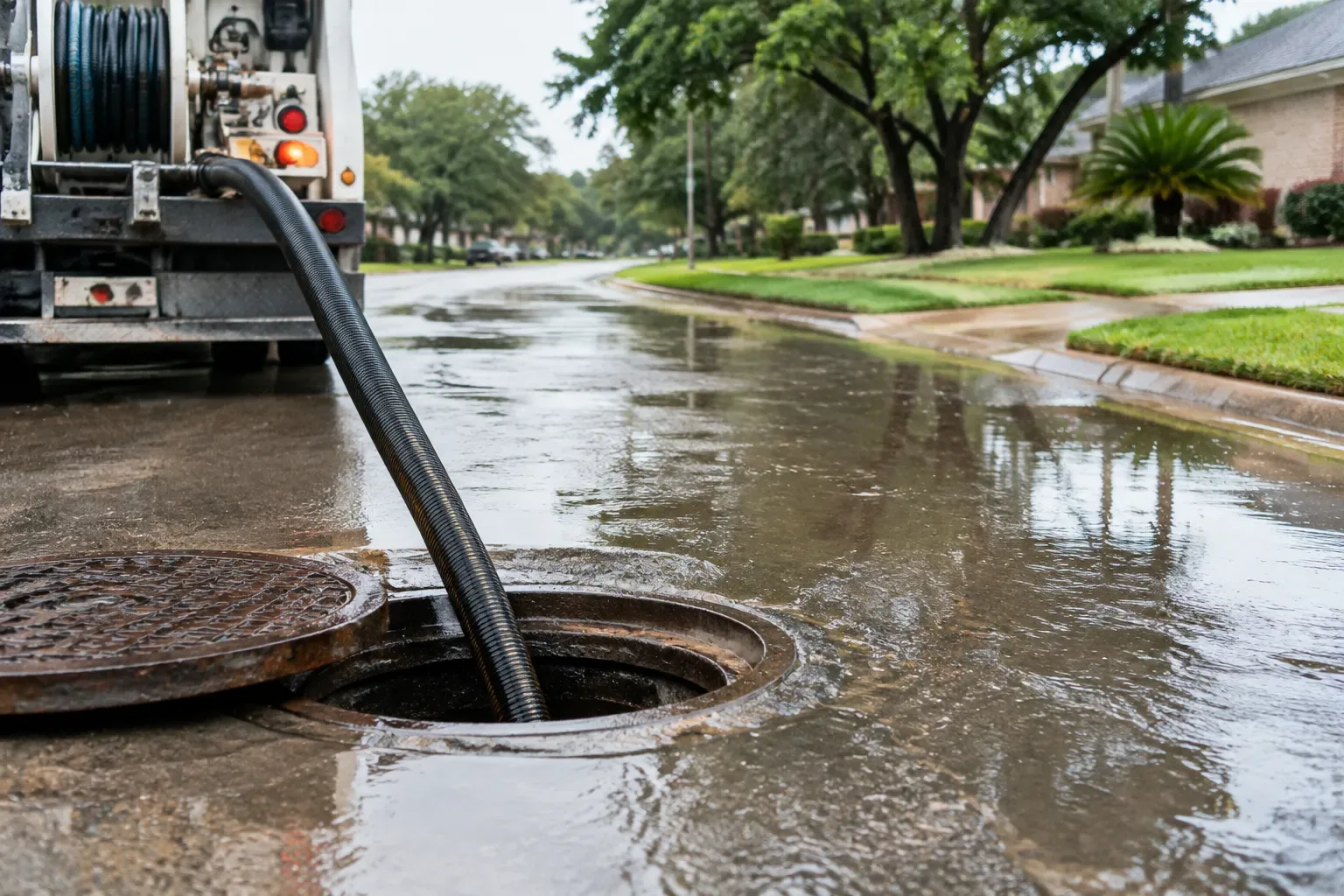
Can Heavy Rain Cause Sewer Backups Near N Braeswood in Meyerland?
Yes. Heavy rain can contribute to a sewer backup near N Braeswood in Meyerland, especially when a private sewer lateral, the pipe connecting a building to the public sewer, is already partially blocked or damaged. Rain does not automatically prove the public sewer is the source, though. It can also expose roots, settlement, failed joints, or a clog in the building drain.
The urgent distinction is between sewage rising from a toilet, tub, or floor drain and stormwater entering from outdoors. If wastewater is coming up through fixtures, stop using water inside the property and arrange an assessment. For local plumbing help, Houston Plumbers Pro LLC serves Southwest Houston.
Quick Answer
A severe storm can add hydraulic stress to drainage systems and reveal a restriction that was less noticeable in dry weather. In Meyerland, it is also important to separate a sanitary-sewer backup from overland flooding, such as water entering through a door, yard, cleanout, or another exterior opening.
Several fixtures backing up at once, particularly the lowest drain in the building, points to a downstream drainage problem that needs investigation. One slow sink or one overflowing toilet may instead be an isolated fixture issue. Neither symptom alone confirms where the obstruction is located.
Why can heavy rain trigger a sewer backup?
Rainfall can increase flow and strain available drainage capacity. Federal guidance explains that heavy precipitation can overwhelm sewer-system capacity in systems affected by excess inflow, although the terminology and configuration of a particular local system must be confirmed before applying it to a specific address. See the EPA overview of combined sewer overflows for that broader context.
On private property, rain may be the event that exposes a line with little remaining capacity. A partially blocked pipe can still pass ordinary daily wastewater. During or shortly after a storm, additional flow, saturated soil, or pressure around compromised joints can make the restriction apparent.
Older sewer laterals can be more vulnerable when they have root intrusion, aging joints, settlement, or a damaged section. Those are possible causes, not conclusions that can be made from rain alone. A camera inspection or other professional testing is needed to identify the condition and location of the problem.
What signs suggest a main sewer line problem instead of one clogged drain?
The pattern matters more than any single symptom. A main-line restriction affects drainage downstream of several fixtures, while an isolated clog generally stays limited to one fixture or branch line.
| What you notice | What it may suggest | What it does not prove |
|---|---|---|
| One sink drains slowly | A clog in that fixture's trap or branch drain | A main sewer failure |
| Toilet flushing causes water in a tub or shower | A downstream restriction serving more than one fixture | Whether the restriction is private or public |
| Water rises through a floor drain during fixture use | A backup in the building drain or sewer lateral | That rainwater itself entered the drain |
| Water enters through doors, walls, yard areas, or an exterior cleanout | Overland or structural flooding may be involved | A plumbing backup inside the drainage system |
A floor drain is often a low point in the plumbing system, so it may be where a backup becomes visible first. That is different from water flowing into the building from outside, which may require a flood-response or drainage approach rather than drain clearing alone.
What should you do immediately if sewage backs up after a storm?
Protect people first, then preserve information that helps identify the source. The CDC advises precautions around floodwater and sewage-contaminated materials because they can create health hazards. Review the CDC's after-a-flood safety guidance before handling affected areas.
- Stop using toilets, sinks, showers, dishwashers, and washing machines. More water use can worsen the backup.
- Keep people and pets away from the affected area. Avoid contact with wastewater, and avoid standing water where electrical hazards could exist.
- Do not pour chemical drain cleaner into the system. It may not clear a main-line obstruction and can create a handling hazard for anyone opening the line.
- Document the time, rain conditions, first affected fixtures, water level, visible contamination, and damage with notes and photos when safe to do so.
- Arrange a plumbing assessment. If there is evidence of a street, manhole, or broader neighborhood issue, report it to the appropriate utility or drainage authority as well.
Do not mix cleaning chemicals or begin extensive cleanup before the source is understood. Insurance coverage and cleanup requirements depend on the policy and confirmed type of water damage, so a plumber cannot determine coverage on an insurer's behalf.
Is the problem in the private sewer lateral or the public sewer?
That question cannot be answered reliably by the weather, a single fixture, or a neighbor's experience. Responsibility often depends on where the obstruction, break, or capacity issue is found. The building drain and private lateral may be the property owner's responsibility, while a restriction in public infrastructure may require the responsible utility or drainage agency to investigate.
A plumber can inspect accessible cleanouts, evaluate drainage behavior, and, where appropriate, use a sewer camera or locating equipment. These findings can help show whether the problem appears to be on the private side. They do not, by themselves, establish responsibility for a public-system failure.
Repeated backups after storms deserve a closer look rather than repeated temporary clearing. For homes, residential water-line and drainage installation services may be relevant when inspection confirms a line needs repair, replacement, or new drainage work. For a business property, commercial water-line and drainage installation addresses the different demands of commercial systems.
When does drain clearing help, and when is it not enough?
Drain clearing can help if the confirmed issue is a removable buildup or blockage in the private line. It may restore flow quickly, but it is not a complete solution if the pipe has root intrusion, a separated joint, settlement, or structural damage.
The common mistake is treating every rain-related backup as a routine clog. If the same pattern returns after storms, ask for the line to be evaluated rather than assuming repeated clearing will prevent another event. A confirmed damaged section may need targeted repair or replacement; a confirmed public-side issue requires a different escalation path.
If a commercial property also has a gas odor or suspected gas-line issue during a storm response, leave the area and follow appropriate safety procedures rather than trying to diagnose it as a drainage issue. Commercial gas leak repair information can help property managers understand that separate concern.
How can Meyerland residents prepare before the next severe storm?
Preparation is most useful when it targets a known weak point. If a property has had a prior backup, locate the cleanout if it is safely accessible, keep the area clear, and retain records of prior inspections or camera findings. Do not open a cleanout during an active backup unless a qualified professional directs you to do so, because pressurized wastewater can spill out.
For buildings near N Braeswood, keep an eye on the difference between indoor fixture backup and water moving across the yard or into the structure from outside. Meyerland's flood-prone setting makes that distinction especially important. The response may involve plumbing, drainage, flood cleanup, or a public agency, depending on the confirmed source.
For additional local service context, see plumbing services in Meyerland. A written description of the symptoms, rainfall timing, and affected fixtures will make any assessment more efficient.
When should you request emergency plumbing help?
Request help promptly when sewage is entering the living or work area, multiple fixtures are backing up, wastewater is still rising, or you cannot safely isolate water use. The immediate goal is to limit additional discharge and identify whether the restriction is within the building drain or private lateral.
Houston Plumbers Pro LLC provides emergency plumbing service in Houston, Braeburn, and Meyerland. Ask what access is needed, such as a cleanout location or affected fixture, and share the documentation collected during the event.
A practical takeaway: if several fixtures back up after heavy rain, stop using water and treat it as a drainage-system problem until inspection identifies the source.
Ready to discuss your project?
If a post-storm backup near N Braeswood is affecting multiple fixtures, reach out for an assessment of the drainage line and next steps.
FAQ
Can heavy rain make my toilet back up in Meyerland?
Yes, but rain is not necessarily the direct cause. Heavy rain can expose a restricted private drain line or add stress to public infrastructure. If the toilet backs up along with a shower, tub, or floor drain, the pattern suggests a downstream drainage issue rather than a problem limited to the toilet itself. A plumber needs to inspect the line to identify the actual location and condition.
Why is water coming up through my floor drain after rain?
A floor drain is often one of the lowest openings in a building's drainage system, so it can be the first place a downstream backup becomes visible. If the water appears when toilets, sinks, or appliances are used, a sewer-line restriction is possible. If water enters from outside without fixture use, overland flooding or an exterior drainage issue may be involved instead.
Is a sewer backup after a storm always the city's responsibility?
No. The blockage may be in the building drain or private lateral, which can be separate from public sewer infrastructure. It may also be a public-side problem, but that requires confirmation by the relevant utility or agency. A plumbing inspection can document conditions on the private side and help clarify what should be reported next; it cannot assign public-system responsibility by itself.
Should I use a chemical drain cleaner after a sewer backup?
No, not as a response to a suspected main-line backup. Chemical products may not reach or remove roots, damaged pipe sections, or a major obstruction, and they can leave hazardous material in the plumbing system. Stop water use and seek an assessment instead. For more general maintenance topics, the Houston Plumbers Pro blog has additional plumbing guidance.
How do plumbers find the cause of a sewer backup?
The process may include checking which fixtures are affected, testing drainage, accessing a cleanout, and using a sewer camera or locating equipment where appropriate. A camera can reveal some conditions inside the pipe, such as roots, buildup, offset joints, or damage. The exact approach depends on access, the backup pattern, and whether the line can be safely evaluated at that time.
Can tree roots cause sewer backups mainly when it rains?
They can contribute. Roots entering a pipe can reduce its internal opening and catch paper or debris. A line with a partial root obstruction may seem workable in dry conditions, then struggle when flow or groundwater conditions change during a storm. Root intrusion is only one possible explanation, however, and should be confirmed by inspection rather than assumed from the timing alone.
Is sewage backup water dangerous to clean up myself?
It can be. Sewage-contaminated water may contain harmful contaminants, and the risk is higher if there is widespread standing water, porous materials, or electrical exposure. Keep people and pets away, use appropriate protective measures if contact cannot be avoided, and follow public-health cleanup guidance. Professional cleaning or restoration may be appropriate depending on the extent and confirmed source of contamination.
What details should I save for a plumber or insurance company?
Record when the backup began, whether rain was falling or had recently stopped, which fixture was affected first, and whether multiple fixtures were involved. Save photos or video of water levels and damage only when doing so is safe. Also note whether water entered from outside, came through drains, or both. Those details help separate possible plumbing backup from general flood intrusion.
