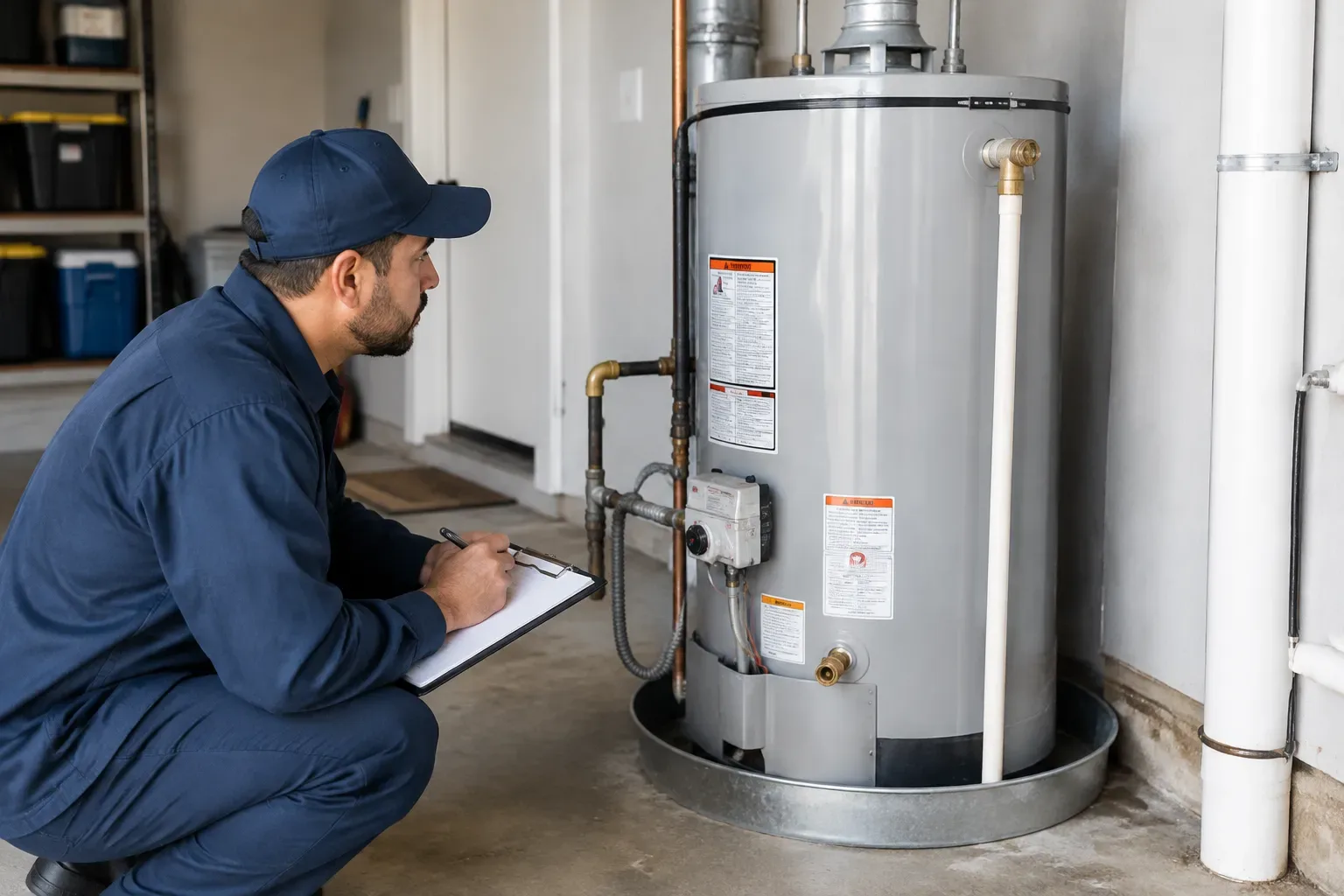
How Often Should Older Water Heaters Be Checked Near Hillcroft?
An older water heater near Hillcroft should receive a visual and operational check at least once a year, with an earlier professional inspection if it has an unknown service history, rust, moisture, unusual noises, inconsistent hot water, or a prior leak. A unit does not need to be actively failing to deserve attention. Small changes around the tank or its connections can become water damage or a no-hot-water problem if they are ignored.
For homeowners in Southwest Houston, Houston Plumbers Pro LLC provides a local route for water-heater and plumbing concerns. The right schedule still depends on the heater type, manufacturer guidance, condition, and what an inspection finds, not on the neighborhood name alone.
Quick Answer
Plan a yearly check for an older unit, then move that timeline up when warning signs appear. A routine check should look beyond the tank label to the tank body, fittings, shutoff, drain pan, discharge piping, visible venting or wiring, and the condition of nearby materials.
Do not assume every older heater needs replacement. A worn connection, valve, thermostat, or heating component may be repairable. A leak from the tank body itself, however, generally points toward replacement rather than a lasting repair.
Arrange a visual and operational check for an older water heater, then schedule service sooner for leaks, corrosion, noise, or unreliable hot water.
Why does an older water heater need earlier attention?
Age alone does not prove that a heater is about to fail. Its condition is shaped by installation quality, past maintenance, water conditions, daily demand, and the health of the tank and connected piping. The real concern is that age can leave less margin for a small defect to remain harmless.
Houston's humid, wet climate also makes moisture around an installation more consequential. An inspection should include the tank, fittings, pan, nearby flooring, and accessible surrounding materials for current or past water damage. In a garage, closet, or utility area with limited drainage, a minor leak can spread before it is noticed.
Sediment is another reason to inspect rather than guess. Material collecting at the bottom of a storage tank can contribute to noise, reduced efficiency, and added stress on heating components. Whether a heater should be flushed, and how often, should follow its manufacturer instructions and the observed condition, not a universal calendar rule. The U.S. Department of Energy's water-heater maintenance guidance also emphasizes equipment-specific maintenance and safe operation.
What should be checked during an old water heater inspection?
A useful inspection separates visible condition from operational safety. It should also account for the equipment type, because tank, tankless, gas, and electric units do not have identical service needs.
Storage-tank condition
The inspector checks for corrosion on the tank body, moisture at the drain valve, water in the drain pan, damaged insulation, and rust at fittings. A tank-body leak is more serious than a drip from an external connection.
Water connections and shutoff
Accessible hot and cold connections are examined for seepage, mineral buildup, corrosion, and signs of past repair. The cold-water shutoff should be accessible and its condition assessed, especially where the heater is in a confined space.
Temperature-and-pressure relief system
The relief valve and its discharge piping need a visual review for leakage, improper routing, or repeated discharge. This is a safety component, so a homeowner should not force or aggressively test a suspect valve.
Fuel-specific safety items
Gas equipment needs a visual review of burner operation and accessible vent components. Electric equipment needs safe observation of visible covers, disconnects, and overheating signs, while electrical diagnosis belongs to a qualified professional.
Inspectors also ask about operation. Popping, rumbling, banging, slow hot-water recovery, fluctuating temperature, discolored water, and repeated relief-valve discharge all provide useful clues. A symptom is not a diagnosis. For example, rumbling may be associated with sediment, but only inspection can determine whether sediment, a component issue, or another condition is present.
Which warning signs mean you should not wait for the annual check?
Move up the inspection if you see any of the following:
- Water under or around the heater, including moisture in the drain pan.
- Rust on the tank body, fittings, or nearby piping.
- A new popping, rumbling, or banging sound during heating.
- Hot water that runs out sooner, recovers slowly, or varies unexpectedly.
- Repeated water from the temperature-and-pressure relief discharge pipe.
- Discolored hot water or a new metallic odor.
- A shutoff that is hard to access, visibly corroded, or questionable in an area where a leak could spread.
A visible leak does not automatically prove the tank has failed. It could originate at a fitting, valve, drain connection, or attached plumbing. A professional finding identifies the actual source and whether a repair is realistic. For external leaks or damaged connecting pipes, residential leak repair may be the relevant next step.
How should you prepare for a water heater inspection?
A little documentation helps the inspection focus on the right questions, particularly when the unit was installed before the current owner moved in.
- Photograph the heater, the area beneath it, any rust or wet spots, and the model and serial-number label if it is safely visible.
- Write down the fuel type, approximate installation date if known, recent changes in hot-water performance, and any previous repairs or leaks.
- Clear a safe path to the unit without removing covers, disconnecting wiring, or forcing valves.
- Tell the plumber whether the leak is active, whether hot water is still available, and whether the unit is in a garage, closet, attic, or utility space.
- Ask what was observed, what is repairable, and what condition would make replacement the more practical choice.
For a standard storage-tank unit, a residential water heater service visit can help clarify the condition of the appliance and its accessible connections. If the issue involves a water line, drain arrangement, or surrounding plumbing rather than the heater itself, the repair path may be different.
Should an older water heater be repaired or replaced?
Start with leak location and safety, not age alone. An isolated problem involving a connection, valve, thermostat, heating element, or another replaceable component may support repair if the rest of the system is in sound condition. Parts availability, the extent of corrosion, prior repair history, and the risk of secondary water damage should all be part of the decision.
Replacement is generally the more realistic path when the tank body is leaking or severely corroded. Repeated safety-related discharge, damaged venting, or a compromised installation also calls for a professional assessment before continuing to use the unit. A new appliance will not solve a poor drainage, venting, or piping condition by itself, so the installation environment deserves attention too.
For commercial properties with gas equipment, building managers should treat gas-related concerns separately from ordinary maintenance and use appropriate commercial gas leak repair guidance. Residential gas odor or suspected gas leakage requires the same safe response: leave the area and involve the gas utility or emergency services rather than attempting a repair.
What should you do if the water heater starts leaking?
If the leak is significant and you can safely reach the cold-water supply valve, shut off the water supply to reduce damage. Do not handle a damaged electrical connection, force a stuck valve, or attempt to repair gas components. If it is safe to do so, document where the water appears to be coming from and move belongings away from the area.
An active leak can affect flooring, walls, adjacent framing, and nearby belongings, especially in humid conditions where lingering moisture can worsen corrosion and damage. The practical priority is controlling water safely, then identifying the source. For a substantial leak or immediate plumbing concern, use the available emergency plumbing information rather than waiting for a routine maintenance appointment.
The practical takeaway for older units near Hillcroft
Treat the annual check as a minimum, not a reason to ignore new symptoms until next year. Catching moisture, corrosion, sediment-related noise, or a declining shutoff early gives you more repair options and more time to plan if replacement becomes necessary.
Ready to discuss your project?
For an older water heater near Hillcroft, request an inspection before a small leak or performance change becomes a larger repair decision.
FAQ
How often should a 10-year-old water heater be inspected?
A 10-year-old unit should be visually and operationally checked at least yearly, with a professional visit sooner if its maintenance history is unknown or any warning sign appears. Ten years does not automatically mean replacement is required. The better question is whether the tank body, fittings, safety components, hot-water performance, and surrounding installation area remain in acceptable condition.
Can I inspect my own water heater?
You can safely look for obvious moisture, rust, water in the drain pan, unusual sounds, damaged visible insulation, and changes in hot-water performance. Record what you see, but do not remove electrical covers, force a relief valve, alter gas connections, or try to correct venting. A professional inspection is needed to confirm the source of a leak or an operational safety concern.
Does popping from a water heater mean it is failing?
Not necessarily. Popping or rumbling can be associated with sediment in a storage-tank heater, but it can also require evaluation of other operating conditions. The sound is an observable symptom, not proof of a single cause. Arrange an inspection, especially if noise is new, grows louder, or appears alongside slow recovery, leaks, or inconsistent water temperature.
Is rust on top of a water heater always serious?
Rust deserves attention, but its seriousness depends on its location and source. Surface corrosion on an external fitting may be different from corrosion on the tank body or evidence of a persistent leak above the unit. A technician can distinguish cosmetic surface rust from active deterioration and check whether nearby piping or connections are contributing to the moisture.
Should I flush an older water heater every year?
Do not assume every older heater should be flushed on the same schedule. The manufacturer instructions, sediment observed, water conditions, and equipment condition should guide that decision. In some cases, attempting maintenance on a neglected or compromised unit needs professional judgment. For additional practical plumbing topics, see the company's plumbing blog.
What does water in the drain pan mean?
Water in the pan signals that moisture is reaching the area, but it does not by itself identify the source. It may come from the tank, a fitting, a relief discharge line, a drain valve, condensation, or another nearby plumbing issue. Dry the area only if it is safe, note whether water returns, and arrange an inspection to locate the origin before hidden damage expands.
What if my old water heater is still making hot water?
Continue monitoring it, but do not use available hot water as proof that everything is sound. A unit can still heat water while developing a slow leak, corrosion, sediment buildup, or a weakening connection. Annual checks are designed to catch these conditions before they become an outage or a water-damage event. The Consumer Product Safety Commission's water-heater safety information is also a useful reminder to take temperature and equipment safety seriously.
Does a leaking tank always need to be replaced?
A confirmed leak through the tank body generally means replacement is the practical solution because the tank itself is compromised. A leak at an external valve, fitting, or connected pipe may be repairable instead. Do not rely on appearance alone to make that distinction. Locating the source first avoids replacing equipment for a problem that may be outside the tank.
