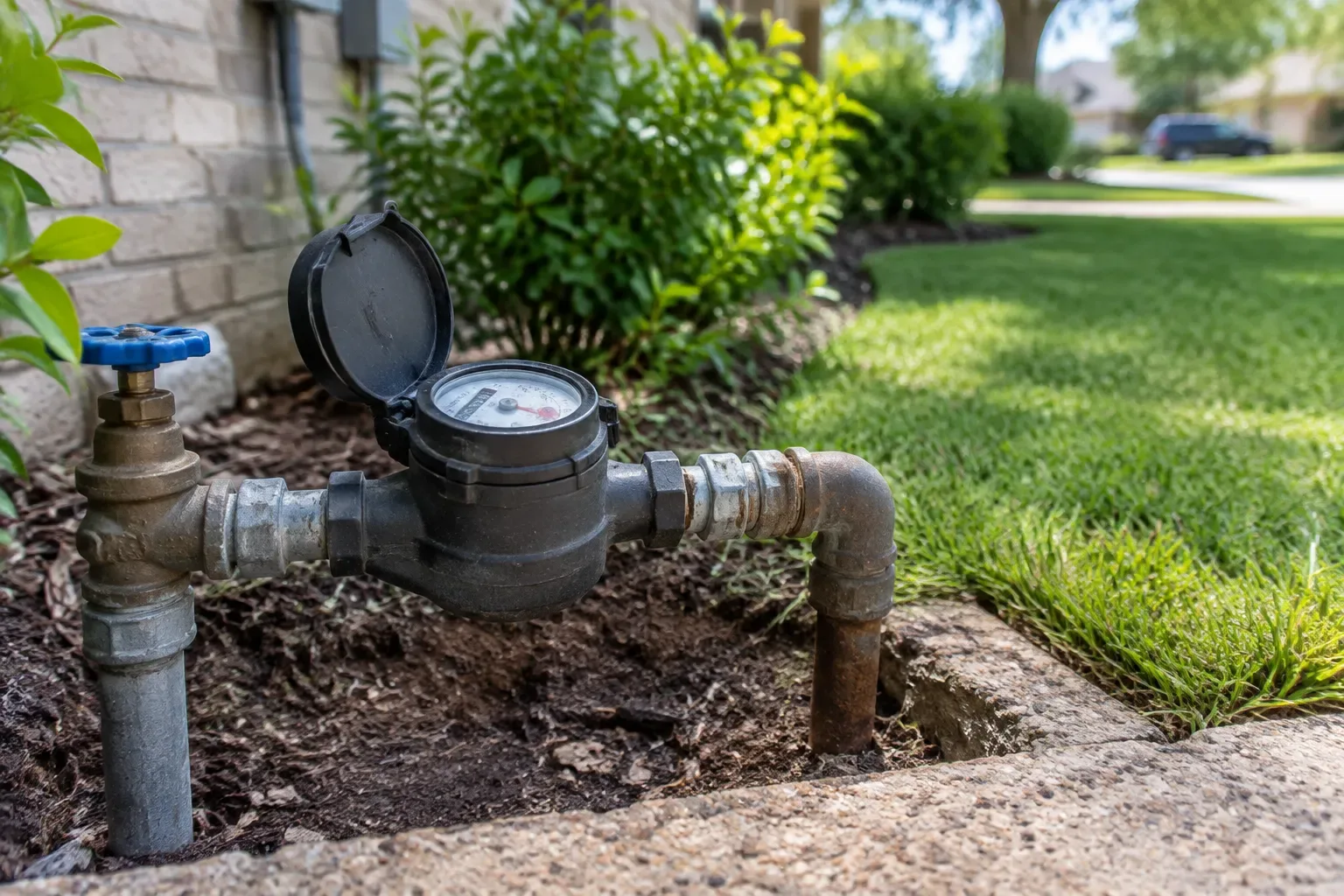
How Can I Tell if a Water Line Leaks Near Fondren in Braeburn?
A possible water-line leak often shows up as water use that does not match your routine: a higher bill, a meter that keeps moving while water is off, lower pressure, or a persistently wet area near the yard, driveway, or foundation. None of those signs proves an underground pipe is leaking by itself. Rain, irrigation, a leaking toilet, drainage problems, and indoor plumbing leaks can create similar symptoms.
For properties near Fondren in Braeburn, start with safe observations and a basic meter check, then have a plumber confirm the location before anyone digs. Houston Plumbers Pro LLC provides plumbing services in Southwest Houston, including leak detection and pipe repair.
Quick Answer
Turn off known water uses, including faucets, water-using appliances, and irrigation, then check whether your water meter continues to register use. Pair that result with visible clues such as an unexplained wet patch, pooling water, erosion, or a sudden pressure change. If the meter moves with everything off, there is likely continuous water use somewhere on the property, but a professional inspection is needed to determine whether it is a buried service line, toilet, irrigation branch, fixture, or another source.
What signs point to a possible underground water-line leak?
A buried leak can be quiet for a long time. Watch for changes that persist after rain has passed and normal water use has not changed. The following comparison helps separate what you can observe from what still needs testing.
| What you notice | Possible explanation | Useful next step |
|---|---|---|
| A higher water bill with no change in household habits | A hidden plumbing leak, toilet leak, irrigation leak, or a change in water use | Check toilets and irrigation, then perform a meter test |
| A wet, soft, or unusually green yard area | A buried water-line leak, irrigation issue, rain saturation, or poor drainage | Note recent rainfall and test the meter before assuming the cause |
| Low or fluctuating pressure at several fixtures | A supply-line restriction, leak, valve issue, fixture issue, or utility-side condition | Compare multiple fixtures and arrange an inspection if it persists |
| Water pooling, bubbling, or soil washing away | Escaping water, rain runoff, drainage failure, or another outdoor source | Keep people away from soft ground and seek prompt evaluation |
| Damp flooring, wall areas, or moisture near a slab | A plumbing leak, condensation, roof or wall intrusion, or drainage-related moisture | Avoid treating it as a confirmed slab leak without testing |
The U.S. Environmental Protection Agency notes that toilets, faucets, and other household plumbing sources can waste water, so checking common indoor sources first is worthwhile before assuming the service line is at fault. See the EPA's guidance on causes and types of household water leaks.
How do I perform a water meter leak test safely?
A meter test does not locate the problem, but it can show whether water is being used when the property should be idle. Meter displays vary, and very small or intermittent leaks may need a longer observation period.
- Turn off faucets, showers, water-using appliances, and irrigation. Make sure no one will use water during the test period.
- Check toilets for silent refilling or running, because a toilet leak can move the meter without any outdoor pipe problem.
- Record the meter reading or take a clear photo of the display. If your meter has a flow indicator, note whether it is moving.
- Wait without using water, then compare the reading or indicator again. A changed reading suggests continuous water use somewhere after the meter.
- If the meter changes, document what you observed, including the time, weather, irrigation schedule, and affected fixtures, then arrange professional diagnosis.
Do not remove meter components, tamper with utility-owned equipment, or force a valve that will not move. If a property-side main shutoff is safely accessible and turns normally, closing it may help limit damage from a confirmed or suspected active leak on the property side. Responsibility boundaries and shutoff configurations vary, so confirm them for the specific address before planning repairs.
Could the problem be a toilet, irrigation line, or drainage issue instead?
Yes. A moving meter indicates water is passing through the meter, not where that water is going. A silently leaking toilet, a damaged sprinkler line, and an underground service-line leak can all raise usage. A wet yard may also be caused by rainfall, poor grading, or a drainage problem without any supply-pipe leak.
Check each possibility in a logical order. Look for toilet tank refilling, review irrigation run times, and note whether the wet area appears only after rain. If standing water or saturated soil is tied to drainage rather than pressurized water escaping from a pipe, the scope may involve drainage work instead. For new lines and drainage-related needs, see the company's residential water-line and drainage installation service.
Houston-area clay soils can move as moisture changes. That movement can place stress on buried piping, but it can also contribute to foundation or slab symptoms that are not caused by plumbing. Cracks or moisture near a slab are reasons to investigate, not proof of one specific cause.
When does low water pressure suggest a water-line problem?
Pressure loss matters most when it affects several fixtures at once and does not improve after obvious causes are ruled out. A leak on a supply line can reduce available pressure because water escapes before reaching fixtures. Still, one weak shower or faucet often points to a localized issue such as an aerator, cartridge, fixture valve, or clog rather than a buried main line.
Compare hot and cold water at more than one fixture. If the reduction is widespread, sudden, or paired with meter movement, wet ground, or an unexplained bill increase, document it for the inspection. If pressure is normal everywhere except one fixture, start with that fixture instead of assuming a large underground repair is needed.
What will a plumber check before recommending a repair?
A proper diagnosis should narrow the problem before excavation. Depending on the symptoms and access, a plumber may use visual inspection, pressure testing, acoustic or electronic leak detection, and targeted access methods. These steps help identify whether water loss appears to be inside the building, on an irrigation branch, along the property-side supply line, or elsewhere.
No method can promise that every buried leak will be repaired without some access work. The goal is to avoid broad, unnecessary digging and match the repair to the confirmed condition. Homes across Southwest Houston have different construction dates, prior repairs, pipe materials, and line routes, so neither the leak location nor the best repair method can be assumed from the neighborhood alone.
For a business property, water use may also involve restrooms, equipment, or irrigation. Commercial sites with a confirmed line or drainage need can review commercial water-line and drainage installation options. If an odor is present or the concern could involve a gas line rather than water, leave the area as appropriate and use a qualified provider for commercial gas leak repair, rather than treating it as a water-line issue.
When is a suspected water-line leak an emergency?
Prompt action is sensible when water is flowing uncontrollably, pooling rapidly, washing away soil, entering the building, or approaching electrical equipment. Major pressure loss, flooding near the foundation, or signs of structural movement also justify a faster professional assessment. Avoid flooded areas where electrical hazards may be present, and never excavate near utility lines yourself.
A slow meter change with no active flooding is usually a diagnostic concern rather than a reason to panic. The common mistake is delaying until a small issue becomes visible damage, or taking the opposite approach and authorizing major excavation based on a single wet spot. Gather the meter reading, photos, rainfall history, and fixture observations so the inspection can begin with useful evidence.
What should I do before scheduling a leak inspection?
Write down when the symptoms started, which fixtures are affected, whether the meter changed during a no-use period, and whether irrigation or recent rain could be involved. Take photos of pooling, erosion, or damp areas from a safe distance. If you can safely identify an accessible property-side shutoff, note its position, but do not force it.
For suspected water loss near Fondren or elsewhere in Braeburn, a targeted inspection is more useful than guessing between a full replacement and no repair. Ask for the diagnosed location, the evidence supporting that finding, the proposed access method, and a written estimate before work begins.
Ready to discuss your project?
If meter movement or a persistent wet area is raising concerns near Fondren in Braeburn, request a focused leak inspection and written estimate.
FAQ
How do I know if my main water line is leaking underground?
Look for a combination of signs: a meter that changes while all known water uses are off, unexplained consumption, persistent wet ground, pooling, erosion, and reduced pressure at multiple fixtures. The meter test only confirms likely continuous water use after the meter. It cannot identify the exact pipe or distinguish every indoor, irrigation, and buried-line possibility. A leak-location inspection provides that confirmation.
Can an underground water leak make my yard wet even if it has not rained?
Yes, a leaking buried supply pipe can keep one area damp, soft, or greener than surrounding ground. Irrigation leaks and drainage discharges can do the same. Check whether the area correlates with sprinkler cycles, whether the meter moves during a no-use test, and whether nearby water is actually coming from runoff. Avoid digging until utility locations and the leak source are assessed.
Why is my water meter moving when everything is turned off?
It usually means water is flowing somewhere after the meter. Common possibilities include a running toilet, ice maker or appliance cycle, irrigation leak, fixture leak, or concealed plumbing leak. Recheck that all water uses are truly off, including automatic systems. The Houston Plumbers Pro LLC blog offers additional plumbing guidance, but persistent meter movement calls for direct diagnosis.
Can a water-line leak cause low pressure throughout the house?
It can, particularly when pressure is reduced at several fixtures and the leak is significant enough to divert water before it reaches the building. Other causes include partially closed valves, supply issues, or restrictions in plumbing components. Test several fixtures on both hot and cold settings. A single weak faucet is less likely to indicate a buried main water-line problem.
Is a wet spot by my foundation always a slab leak?
No. Moisture near a foundation can come from rain, drainage runoff, irrigation, condensation, roof or wall leaks, or plumbing beneath or near the slab. Houston-area soil movement can also create symptoms that overlap with plumbing concerns. A professional should compare moisture evidence, meter results, pressure testing, and access conditions before identifying a slab-related plumbing leak.
Should I shut off my water if I think the line is leaking?
If water is actively flowing, causing damage, or creating a safety concern, a safely accessible property-side shutoff may limit further loss. Do not force a stuck valve or operate utility-owned meter equipment. If the leak is slow and there is no active damage, record the meter behavior and arrange an evaluation. A plumber can help determine the safest next step.
Can a plumber find the leak without digging up the whole yard?
Often, testing and leak-detection methods can narrow the likely location so access work is more targeted. Results depend on pipe depth, material, line routing, soil conditions, interference, and the type of leak. Some excavation may still be necessary to verify and repair the pipe. The sensible approach is targeted diagnosis first, not an automatic full-line replacement.
What information should I give a plumber about a possible water-line leak?
Share meter-test photos or readings, recent water-bill changes, the timing of pressure changes, irrigation schedules, rainfall timing, and photos of wet ground or erosion. Also explain which fixtures are affected and whether the property-side shutoff has been used. This information helps distinguish a service-line concern from indoor plumbing, irrigation, drainage, or another issue before repair options are discussed.
