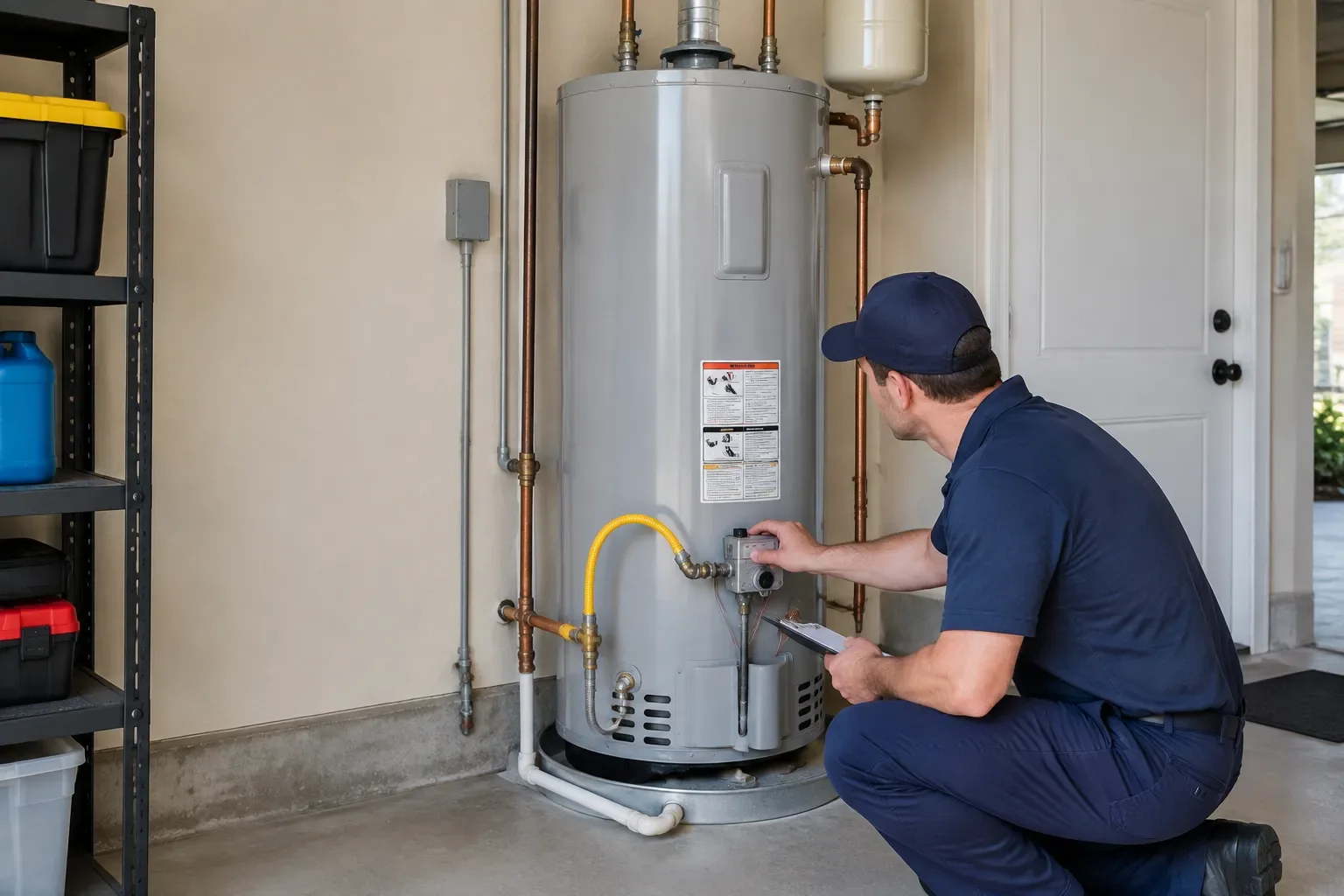
Why Does My Water Heater Run Out Fast Near Bissonnet in Braeburn?
A water heater that runs out fast may be facing more demand than it can handle, but it can also have a heating, plumbing, or component problem. Common possibilities include an undersized tank, a failed electric heating element, burner trouble on a gas unit, sediment, a damaged dip tube, or a mixing issue at one fixture.
For households near Bissonnet in Braeburn, the useful first step is to notice exactly when the water turns cold, which fixtures are affected, and whether the heater recovers normally. Houston Plumbers Pro LLC can help evaluate the equipment and the plumbing around it when basic observations point to a persistent problem.
Quick Answer
If hot water disappears after ordinary use, do not assume the tank needs replacement. First distinguish between a capacity problem and a fault: a shower turning cold only after several people bathe can indicate demand exceeding available supply, while a sudden cold shower after light use can point to a failed component, plumbing crossover, or fixture-level mixing problem.
Cold incoming water during Houston's cooler periods can also make a marginal system seem less capable because it needs more energy and time to heat the water. The U.S. Department of Energy explains that water-heater selection and performance need to account for household demand, capacity, and recovery performance. See its water-heating guidance.
What does the pattern of cold water tell you?
The symptom matters because it narrows the inspection, but it does not prove one cause by itself.
| What you notice | Possible explanation | What an inspection may need to confirm |
|---|---|---|
| Water is never very hot at any fixture | Temperature setting, heating performance problem, or demand beyond the unit's output | Actual outlet temperature, thermostat operation, and burner or element performance |
| Water starts hot but fades gradually after several uses | High household demand, small usable capacity, slow recovery, or sediment | Tank capacity, recovery behavior, sediment condition, and recent hot-water use |
| A shower turns cold abruptly after light use | Fixture cartridge issue, plumbing crossover, dip-tube damage, or component fault | Whether other fixtures stay hot and whether cold water is mixing into the hot line |
| Only one shower or faucet has the problem | Shower cartridge, mixing valve, or fixture-specific issue | Fixture operation and temperature at other fixtures |
| Hot water returns only after a long wait | Weak heating performance, partial electric element failure, burner issue, or heavy demand | Heating source operation, controls, elements, and recovery time |
A labeled tank size is not the same as the amount of hot water a household experiences at the tap. Usable supply changes with incoming-water temperature, fixture flow, the heater's setpoint, and how quickly the appliance can recover while people use water.
Why would a tank water heater run out of hot water quickly?
Tank-style units store a limited supply and then reheat incoming cold water. When the stored supply is depleted faster than the heater can recover, the water at the fixture cools down. This can happen during a cluster of showers, a full bathtub fill, dishwasher use, or laundry.
Several faults can create a similar experience:
Electric heating-element failure
Many electric tank units rely on more than one element. If one is not operating, the tank may heat only part of its stored water or recover much more slowly.
Gas burner or control problem
A gas unit may not heat at its intended rate if burner or gas-control operation is impaired. This requires qualified diagnosis, not homeowner adjustment.
Sediment accumulation
Mineral deposits can occupy space near the bottom of a tank and interfere with heat transfer. The effect varies by equipment condition and must be verified at the property.
Damaged dip tube
The dip tube directs incoming cold water toward the lower area of the tank. If it is damaged, cold water can mix closer to the hot-water outlet and shorten usable supply.
Thermostat or control issue
A control may not call for heat properly or may misread temperature. Testing is needed to establish that finding.
Do not treat every slow-recovery issue as a water-heater failure. A plumbing crossover, where cold water enters the hot-water piping through a fixture or valve, can also interfere with delivered temperature.
Could the problem be one shower instead of the heater?
Yes. If the kitchen sink and another bathroom stay consistently hot while one shower turns cold, the water heater may not be the source of the trouble. A worn shower cartridge or mixing valve can allow too much cold water into the shower stream.
Try this simple comparison before scheduling service: run hot water at a different fixture while the affected shower is cooling. Do not use this as a definitive test, but record whether the other fixture remains hot. That observation helps a plumber decide whether to start with the appliance, the hot-water piping, or the shower valve.
For an issue that affects multiple fixtures or the entire home, residential water heater service is the more direct diagnostic path. For fixture, piping, and broader household plumbing concerns, the company's Braeburn plumbing services page outlines the local service area.
What can you safely check before calling a plumber?
Keep your checks observational. Do not remove access panels, take apart a gas appliance, relight equipment against the manufacturer's instructions, or work on wiring, gas controls, pressure-relief components, or valves you do not understand.
- Note whether the unit is tank-style or tankless, and whether it uses gas or electricity.
- Record which fixtures run cold, how long hot water lasts, and what hot-water use happened beforehand.
- Look around the unit for visible water, corrosion, or moisture, without touching electrical parts or hot piping.
- Check for an obvious tripped breaker if the unit is electric. Do not repeatedly reset a breaker.
- Look for manufacturer fault lights or codes and write them down rather than attempting a repair from the code alone.
- If the issue is confined to one shower or faucet, test another fixture to see whether it remains hot.
This information makes a service visit more efficient because it separates observable symptoms from assumptions about the cause.
When is a water heater too small for the household?
A heater can become effectively undersized even if it once seemed adequate. More occupants, longer showers, a new high-flow fixture, or a changed routine can push demand beyond the stored hot-water supply and recovery rate.
The key question is not simply, “How many gallons is the tank?” It is whether the heater can supply the household's peak period. Peak demand is the period when people commonly shower, wash dishes, and run appliances close together. A professional can compare the unit's type, capacity, condition, and recovery behavior with how the household actually uses hot water.
Replacement is not automatically the best answer. If testing identifies a repairable heating or control issue and the capacity otherwise fits the home, repair may make sense. Replacement becomes more reasonable when a tank is leaking, repairs have not restored normal recovery, parts are unavailable, or the existing unit is materially too small for current use. ENERGY STAR's water-heater information can help frame the equipment types and performance factors worth discussing during a replacement decision.
How do gas and electric water-heater problems differ?
Start by identifying the fuel type. The symptom can look similar, but the inspection path is different.
An electric tank heater may have a tripped breaker, a failed heating element, thermostat trouble, or a wiring issue. A gas tank heater may have burner, ignition, venting, gas-control, or fuel-supply concerns. These are not interchangeable diagnoses, and neither should be handled as a do-it-yourself repair.
If you smell gas, hear a strong hissing sound near gas piping, see scorching, or notice smoke, leave the area and contact the gas utility or emergency services as appropriate. Do not try to diagnose the appliance. For an active plumbing leak or urgent plumbing hazard, see emergency plumbing guidance.
When should you arrange an inspection?
Arrange a professional evaluation when the problem is recurring, affects more than one fixture, takes an unusually long time to recover, or comes with leaks, noises, fault indicators, or inconsistent temperature. Popping or rumbling does not identify sediment by itself, but it is a worthwhile symptom to report.
Bring the appliance brand, model, approximate age if known, fuel type, tank size if labeled, error codes, and your notes about hot-water use. A plumber can then test delivered temperature at multiple fixtures, assess equipment operation, inspect connections, check for crossover, and determine whether the concern lies with the water heater or another part of the plumbing system.
Houston Plumbers Pro LLC provides written estimates before work begins. If you want an evaluation of a repeated hot-water shortage near Bissonnet, you can request service through the contact page. The practical takeaway is simple: document the pattern first, then have the system inspected before choosing repair or replacement.
Ready to discuss your project?
Schedule a Braeburn water-heater evaluation if your hot water is running out faster than your household routine explains.
FAQ
Why does my shower get cold after only a few minutes?
A quick temperature drop can come from a water-heater problem, but it can also be limited to the shower. If other fixtures stay hot while that shower turns cold, a cartridge or mixing valve may be allowing excess cold water into the stream. If every fixture cools quickly, capacity, recovery, heating performance, or a plumbing crossover becomes more likely. Compare another fixture before assuming the tank is at fault.
How long should hot water last from a tank water heater?
There is no reliable universal minute count because tank size, fixture flow, incoming-water temperature, setpoint, household demand, and recovery rate all change the result. Instead, compare today's performance with the unit's prior normal pattern. Note how many showers or other uses occur before water cools and whether the heater regains hot water after a reasonable recovery period. Those details are more useful than a guessed duration.
Why does my water heater seem worse in colder weather?
Colder incoming water takes more energy and time to heat to the same delivery temperature. That can expose a system that was already close to its capacity or had declining heating performance. Seasonal change alone does not prove the heater has failed. If the difference is severe, happens with light use, or comes with faults or leaks, an inspection can separate normal seasonal demand from an equipment issue.
Can sediment make hot water run out faster?
It can, particularly in a tank-style unit, because accumulated material may reduce effective capacity and affect heat transfer. Still, sediment is only one possible cause and cannot be confirmed by the symptom alone. A technician may consider tank condition along with heating performance, recovery, controls, and plumbing crossover. Avoid opening or draining equipment unless you understand the manufacturer's procedure and the safety implications.
Is it safe to keep using a water heater that runs out quickly?
It may be usable while you arrange service if there are no safety signs and the issue is simply reduced supply. Stop treating it as routine if there is active leaking, water near electrical equipment, a gas odor, smoke, scorching, or unusual sounds paired with other warning signs. Businesses with hot-water interruptions can review commercial water heater service for the appropriate service path.
Should I repair or replace a water heater that is not keeping up?
Repair can be sensible when a confirmed component issue is fixable and the unit's capacity still fits household demand. Replacement may be more practical for a leaking tank, unavailable parts, repeated failed repairs, or a unit that is genuinely too small for present use. Gather the model, fuel type, tank size, and symptom history first. The Houston Plumbers Pro plumbing blog also offers additional homeowner plumbing guidance.
Why is the water cold at one faucet but hot everywhere else?
That pattern usually shifts attention away from the water heater and toward the fixture, its cartridge, a local mixing valve, or nearby plumbing. It is still possible for a broader temperature issue to be noticed first at one fixture, so check another hot-water outlet before drawing a conclusion. A professional can test temperatures and isolate whether the issue is local to the fixture or part of the hot-water system.
