How Do I Prepare an Older Home Near Hillcroft for a Freeze?
Prepare an older home near Hillcroft by finding the main water shutoff, checking pipes in unheated or exterior areas, disconnecting hoses, covering outdoor faucets, insulating exposed supply lines, and keeping indoor heat steady. During the freeze, allow warm air into sink cabinets where pipes are vulnerable and watch for a trickling faucet, which can signal a frozen line.
The most important follow-up happens after temperatures rise. A frozen pipe can split while ice blocks the opening, then begin leaking only when it thaws. A quick post-freeze inspection can catch moisture before it damages walls, ceilings, or flooring. For help assessing vulnerable plumbing, Houston Plumbers Pro LLC serves Southwest Houston homeowners and businesses.
Quick Answer
Start with the shutoff valve and the exposed pipes, not just the faucets inside the house. Older and previously modified homes can have mixed pipe materials, inaccessible valves, or uninsulated sections in garages, attics, exterior walls, crawlspaces, and outdoor cabinets. Keep the house heated, protect exterior plumbing, use only safe thawing methods, and inspect every vulnerable area once the freeze ends.
Which pipes should you check first in an older home?
Focus on plumbing that is closest to outdoor air or separated from the conditioned parts of the house. A warm living room does not necessarily protect a water line in an attic, garage, exterior wall, or utility enclosure.
Outdoor faucets and hose connections
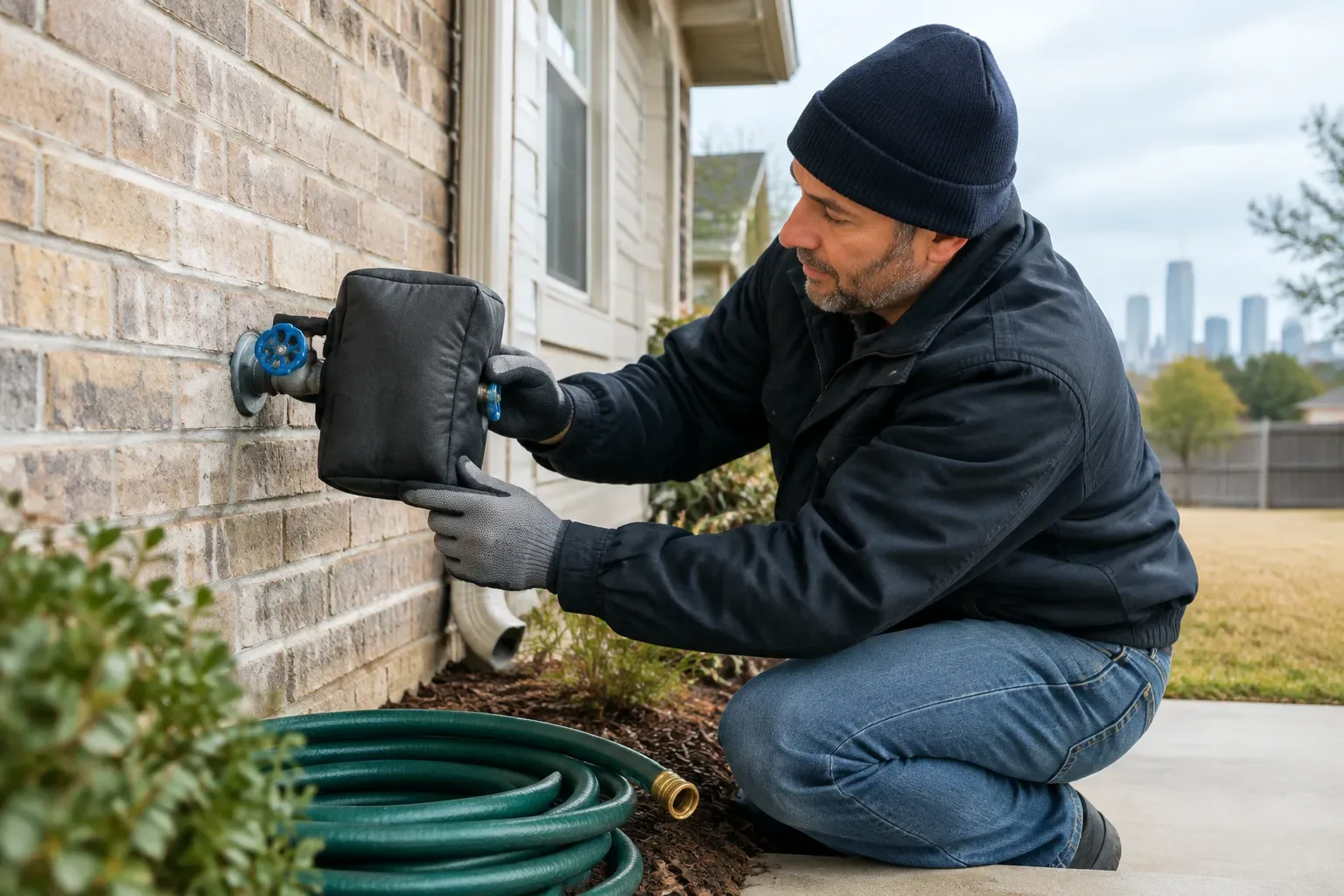
Disconnect garden hoses, drain them, and use an insulated faucet cover on exposed hose bibs. A cover helps limit cold exposure, but it will not fix a faucet that leaks or fails to drain properly.
Garage and utility-area supply lines
Inspect visible pipes along garage walls, near laundry equipment, and in unheated utility spaces. These areas can become much colder than occupied rooms.
Exterior-wall plumbing
Kitchen, bathroom, and laundry lines may run through exterior walls. Open the relevant cabinet doors during freezing weather so room air can circulate around those pipes.
Attics, crawlspaces, and outside cabinets
Look for accessible piping, disconnected insulation, and openings that allow cold air to reach lines. These spaces deserve attention even if the rest of the house feels warm.
A home near Hillcroft may have an older layout or later plumbing repairs, but location alone does not reveal where its vulnerable lines are. Walk the actual property and trace accessible pipes rather than assuming every house has the same setup.
What should you do 24 hours before a freeze?
Short-notice Houston cold snaps can leave little time for major upgrades. The goal is to complete the actions that reduce exposure quickly, then identify anything that needs professional repair before the next event.
- Locate the main water shutoff and make sure it can be turned off. Label it clearly, and show other household members where it is.
- Check secondary shutoffs under sinks, behind toilets, and near appliances where accessible. Move stored items that block access.
- Disconnect outdoor hoses, drain them, and install suitable insulated covers on exposed faucets.
- Add correctly sized pipe insulation to accessible exposed supply piping. Keep insulation and temporary materials clear of flues, open flames, and heat-producing equipment.
- Close gaps around plumbing penetrations, doors, or access points that admit cold air, but do not block required ventilation or combustion-air openings.
- Set the thermostat to maintain heat and avoid large overnight setbacks. Open sink cabinets where warm indoor air can reach plumbing in exterior walls.
- Check seldom-used bathrooms, laundry rooms, garages, and utility spaces. Confirm that windows and exterior doors close fully.
The National Weather Service winter safety guidance recommends following official forecasts and warnings. Use those alerts as the signal to begin preparation rather than waiting for a single unofficial temperature threshold. The temperature at which a particular line freezes depends on its location, insulation, airflow, pipe material, and how long the cold lasts.
Should you leave faucets dripping during a Houston freeze?
A controlled drip can be useful for some plumbing layouts, but it is not a complete freeze-protection plan. Flowing water may reduce the chance of freezing in a line that serves that fixture, yet it may not protect a separate branch line, a pipe behind a wall, or an outdoor connection.
Use dripping only after the basics are handled: heat is maintained, exposed lines are insulated where possible, hoses are disconnected, and cabinet doors are open around vulnerable interior pipes. Do not rely on a drip to compensate for an uninsulated garage line, a leaking hose bib, or an unheated enclosure.
If a fixture already leaks, do not treat that leak as intentional freeze protection. A plumber can assess damaged fixtures or exposed water-line routing through residential water line and drainage installation services when repairs or more permanent changes are needed.
How do you safely thaw a pipe that has frozen?
An observable warning sign is a faucet that produces only a trickle or no water while other fixtures still have normal flow. That symptom can suggest ice in a nearby line, but it does not prove the location or rule out a shutoff, fixture problem, or a separate low-pressure issue.
Open the affected faucet, then warm the surrounding area gradually with safe household heat. Raising the room temperature, opening cabinet doors, and using a hair dryer on a low, controlled setting are common approaches when the pipe is visible and accessible. Work from the faucet side toward the suspected frozen section, and stop if you see water, hear dripping inside a wall, or cannot safely reach the pipe.
The American Red Cross guidance on frozen pipes also advises protecting pipes from cold and responding carefully when a line freezes. If the frozen section is hidden, inaccessible, or accompanied by a leak, stop trying to thaw it yourself.
How can you tell a frozen pipe from a burst pipe or another plumbing issue?
A frozen line, a burst line, and an unrelated plumbing problem can look similar at first. Separate what you observe from what can only be confirmed through inspection.
| What you notice | Possible explanation | What to do next |
|---|---|---|
| Little or no water at one faucet during freezing weather | A nearby supply line may be frozen, though a fixture or valve problem is also possible | Keep the faucet open, warm the area gradually, and monitor for leaks |
| Water staining, dripping, or a wet cabinet after temperatures rise | A pipe or fitting may have split during the freeze, or an existing leak may have become visible | Shut off water if leakage is active and arrange an inspection |
| Water flowing from a wall, ceiling, or floor | A burst pipe, failed fitting, or another active plumbing leak may be present | Shut off the main water if safe, avoid electrical hazards, and seek urgent plumbing help |
| Low flow at several fixtures | A freeze-related restriction is possible, but so are supply, valve, or water-service issues | Avoid guessing and have the system assessed if normal flow does not return |
For active water release or suspected thaw-related damage, emergency plumbing help in Southwest Houston is the appropriate next step. If water is near electrical equipment or outlets, do not enter standing water or handle electrical connections.
What should you inspect after the weather warms up?
Thawing is the point when hidden freeze damage often becomes visible. Begin with places that may have stayed cold: under sinks on exterior walls, garages, water-heater connections, laundry areas, attic-accessible plumbing, and ceilings or walls beneath bathrooms.
Look for these changes:
- New moisture, drips, puddles, or water stains
- A musty odor in a cabinet or room
- Peeling paint, bubbling drywall, or warped flooring
- A water meter that continues moving when no water is being used
- Reduced pressure or unusual sounds when a faucet runs
A water-heater connection or nearby line should also be checked if it was in an unheated area. Do not remove panels or attempt repairs inside the appliance if you are unsure of the system. For a suspected damaged line, residential leak repair can address the plumbing side of the problem. Moisture can also come from roofing, HVAC condensation, or other building issues, so a plumbing inspection may determine that the source is outside a plumber's scope.
When does an older plumbing system need professional freeze protection?
Permanent work makes sense when a vulnerable condition keeps returning, such as a failed shutoff valve, leaking hose bib, inaccessible pipe route, missing insulation, or a line exposed in an unheated space. It is not always necessary to open walls or replace broad sections of plumbing after one cold night. First identify the actual weak point.
A professional inspection can confirm pipe condition, valve operation, accessible insulation needs, and signs of prior leakage. The right fix may be as limited as repairing a faucet or insulating a reachable section, or it may involve rerouting or replacing a damaged part of the water line. For commercial or mixed-use properties with exposed service lines, commercial water-line and drainage installation may be relevant to a larger plumbing upgrade.
If you smell gas, hear hissing near a gas connection, or suspect a gas leak while preparing the property, do not use flames or electrical switches to investigate. Leave the area and seek appropriate emergency assistance. Businesses with a confirmed or suspected gas-piping issue can review commercial gas leak repair information for plumbing-side repair support.
What is the one mistake to avoid before a freeze?
Do not wait until water stops flowing to find the shutoff valve. A hard-to-reach or inoperable valve turns a manageable leak into a more disruptive water-damage problem. Locate it now, clear access around it, and make sure the people in the home know how to use it.
A short pre-freeze walk-through is more useful than guessing based on the home's age. Check the places where cold air can reach plumbing, protect what is accessible, and inspect again after thawing. For additional maintenance guidance, visit the company's plumbing advice blog.
Ready to discuss your project?
Request a pre-freeze plumbing check for exposed pipes or hard-to-reach shutoff valves near Hillcroft.
FAQ
What temperature causes pipes to freeze in Houston?
There is no single temperature that guarantees every pipe will freeze. An exposed line in a drafty garage, attic, or exterior wall can be at greater risk than a pipe inside a heated cabinet, even at the same outdoor temperature. Watch official forecasts, protect exposed areas before a freeze warning, and keep indoor heat consistent instead of relying on a specific number.
Should I shut off my water before leaving for a freeze?
Shutting off the main supply can reduce the amount of water released if a pipe fails while the property is vacant, but it is not automatically right for every occupied home or plumbing layout. Confirm how your water heater, heating system, appliances, and irrigation are configured first. At minimum, know where the main shutoff is and verify that it works.
Are foam faucet covers enough to protect outdoor faucets?
They help reduce exposure at an outdoor faucet, especially after the hose has been removed and the connection has drained. They do not protect pipe sections farther inside an exterior wall or repair a leaking faucet. If a hose bib drips, will not shut off, or has a damaged connection, address that defect before the next freeze rather than covering it and hoping for the best.
Why is my kitchen faucet only trickling during cold weather?
A trickle may indicate that part of the supply line is freezing, particularly if other faucets work normally. It can also result from a clogged aerator, a partially closed stop valve, or another fixture issue. Leave the faucet open, warm the nearby area safely, and avoid forcing the handle. If flow does not return or moisture appears, professional evaluation is warranted.
Can I use a space heater to thaw pipes under a sink?
A space heater can create fire risk in a confined cabinet or near combustibles, so it is generally safer to warm the room and open cabinet doors instead. For an accessible pipe, controlled warm air from a hair dryer may be appropriate if used carefully. Never leave portable heat unattended, and never use open-flame equipment to thaw plumbing.
What should I do if a pipe bursts after it thaws?
Shut off the home's main water supply if you can do so safely. Move away from standing water near electrical outlets or appliances, and do not use open flames. Then arrange urgent plumbing assistance. Emergency plumbing services are appropriate for active water release, while a small damp spot without active flow still needs timely inspection to limit hidden damage.
How do I know if an old shutoff valve still works?
Locate the valve before cold weather, clear the area around it, and test it cautiously if you are confident it is accessible and not heavily corroded. Do not force a stuck valve, because it can fail or begin leaking. A plumber can assess a questionable main or fixture shutoff and recommend repair or replacement based on its actual condition.
Do I need a plumber after a freeze if everything seems normal?
Not always. If all fixtures operate normally and your post-thaw inspection finds no moisture, stains, pressure changes, or unusual meter activity, monitoring may be reasonable. Schedule an inspection if you found a frozen line, have recurring trouble in the same area, cannot identify vulnerable pipes, or discovered a valve that does not operate. The Houston Plumbers Pro blog also offers additional plumbing maintenance information.
