Why Does My Drain Back Up Near Hillcroft Ave in Sharpstown?
A drain that backs up repeatedly near Hillcroft Ave in Sharpstown may be caused by a simple fixture clog, but the pattern can also point to a restriction farther down a shared branch drain or the private sewer line. The most useful clue is not the street address. It is which fixtures are affected, what activity triggers the backup, and whether wastewater appears in a low drain when another fixture runs.
If one sink is slow, the issue may be close to that fixture. If several drains, toilets, or a floor drain react together, stop unnecessary water use and arrange an evaluation. Houston Plumbers Pro LLC serves Southwest Houston with residential and commercial plumbing help for problems that need more than another round of plunging.
Quick Answer
A recurring backup usually means the original obstruction was only partly cleared or that a condition farther along the drainage path remains. Possible causes include grease or debris buildup, roots entering a pipe, a displaced joint, poor pipe slope, a damaged section, or an issue outside the property's private plumbing.
A symptom alone cannot confirm the cause. A professional can determine where the restriction is and, when appropriate, use a camera to distinguish a removable blockage from a pipe condition that needs repair.
What does the backup pattern tell you?
The affected fixtures help narrow the possible location of the problem. They do not prove a diagnosis, but they give a technician a much better starting point.
| What you notice | What it may suggest | What still needs confirmation |
|---|---|---|
| One sink, tub, or shower drains slowly | A localized fixture trap or nearby branch restriction | Whether debris is limited to that fixture or extends farther downstream |
| A toilet causes water to rise in a nearby tub or shower | A shared branch drain restriction | The exact location and severity of the blockage |
| Multiple fixtures throughout the building back up | A main building sewer restriction or an external sewer issue | Whether the issue is on private property or beyond the private connection |
| Backup occurs mostly during or after intense rain | Rain-related surcharge, infiltration, or a capacity issue may be part of the picture | Whether rain is coincidental, affecting private piping, or connected to a public system issue |
The International Plumbing Code addresses sanitary drainage piping and cleanout access, both of which matter when diagnosing a system that does not drain reliably. Its requirements are a useful technical reference, but a field inspection is still needed to identify the condition of a particular line. See the International Plumbing Code sanitary drainage chapter.
Why did the drain clog again after it was snaked?
Restored flow is not always the same as a resolved problem. A cable may open a narrow channel through buildup, remove part of a soft clog, or temporarily catch roots without correcting the entry point. Water moves again, then solids collect at the same restriction.
Incomplete blockage removal
Grease, wipes, scale, or debris can remain on the pipe wall after a limited opening. The drain may seem normal until enough material gathers again.
Root intrusion
Roots can enter through a joint or crack and trap paper and solids. Removing roots may restore flow, but the damaged opening can allow them to return.
Pipe alignment or slope problem
An offset joint, low section, or damaged pipe can hold solids after each use. This is a structural condition, not simply a routine clog.
Pipe deterioration or collapse
Corrosion, cracking, or a crushed section can restrict flow substantially. Camera findings and line access help determine whether repair or replacement is appropriate.
For a recurring problem inside a residence, residential drainage installation and pipe work may be relevant if inspection identifies a section that cannot be reliably cleaned. Cleaning can help when buildup is the cause. It is not automatically the right answer for a line with a serious alignment or structural defect.
Could heavy rain be related to a drain backup?
Rain timing is worth documenting, but it should not lead to an automatic conclusion that the public sewer is at fault. Intense rainfall can change the hydraulic conditions around drainage systems. For example, saturated ground may expose an existing weakness in buried private piping, and rain-related sewer stress can change how a backup appears.
The EPA explains that combined sewer systems can experience overflow or hydraulic stress during certain intense rain events. That general principle does not establish that a Sharpstown property is served by a combined system or that a specific backup comes from a public line. Read the EPA's overview of combined sewer overflows.
Houston-area soil movement or saturated ground can also be a condition to investigate. Settlement may alter a buried pipe's alignment or create a low spot where solids collect. The property history, pipe material, prior repairs, and camera findings should determine whether that is actually happening.
What should I do before a plumber arrives?
The goal is to limit overflow, preserve useful clues, and avoid creating a more difficult repair situation.
- Stop running dishwashers, washing machines, showers, and other nonessential water fixtures if wastewater is rising or several drains are affected.
- Keep people and pets away from sewage-contaminated water, and avoid electrical equipment near standing water.
- Note which fixture was used first, where water appeared, and whether the event followed laundry, showering, toilet use, or heavy rain.
- Take photos or short videos of visible backup conditions, if it is safe to do so.
- Tell the technician about prior snaking, past repairs, known cleanout locations, and how quickly the problem returned.
If wastewater is coming up through a toilet, tub, shower, or floor drain, treat it as a plumbing priority. Emergency plumbing service in Southwest Houston is appropriate when normal fixture use is no longer possible or overflow could damage the property.
When does a camera inspection make sense?
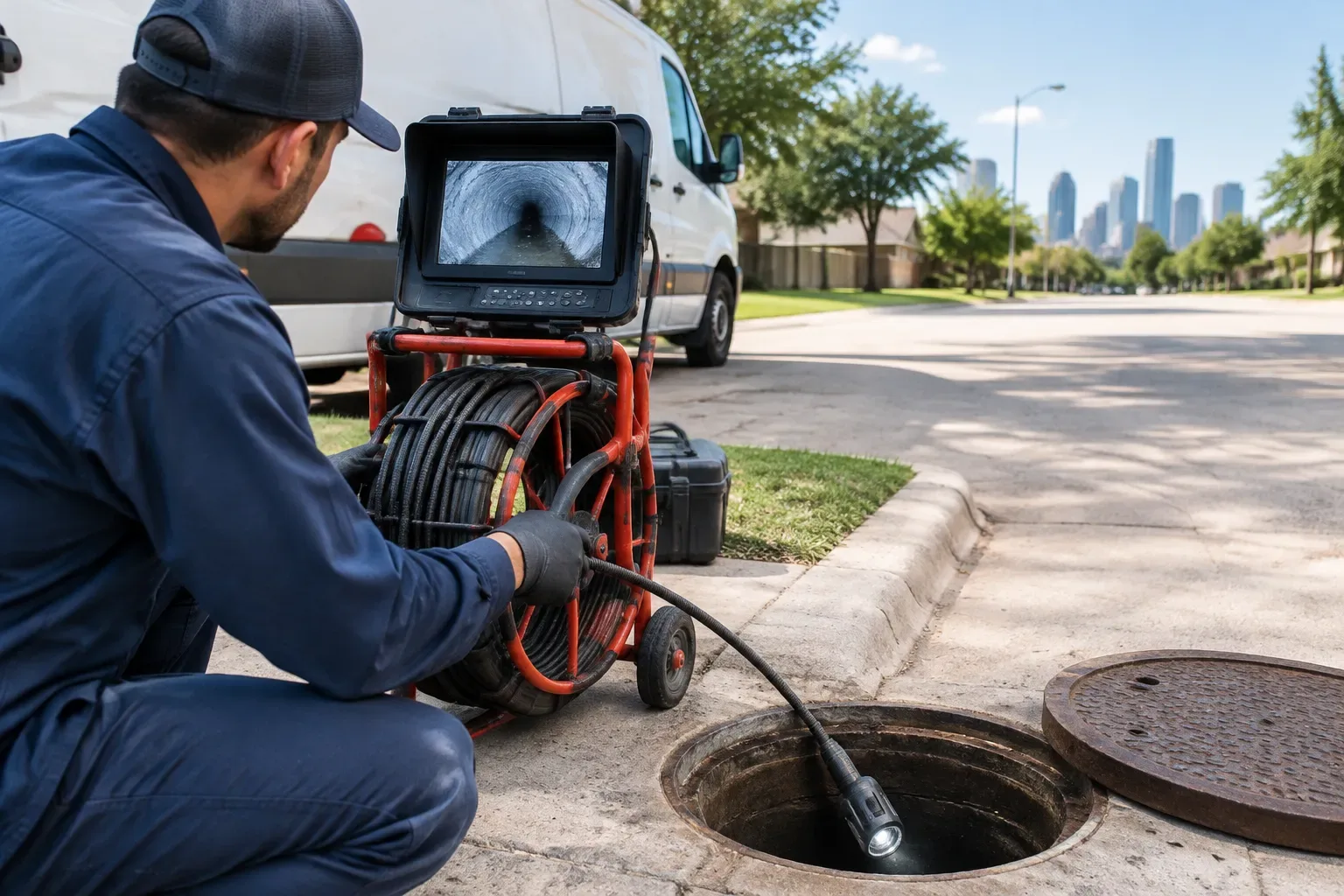
A camera inspection is most useful when a backup keeps returning, multiple fixtures share the problem, or a previous clearing did not last. The camera travels through an accessible line so the technician can look for roots, heavy buildup, a separated joint, a belly, or a collapsed area. A belly is a low section of pipe where wastewater and solids can sit rather than moving fully downstream.
Camera visibility is not guaranteed in every situation. Standing water, dense blockage, pipe access, and pipe condition can limit what can be seen. A proper recommendation should explain what was observed, what remains uncertain, and whether the next step is cleaning, spot repair, or replacement.
For properties with a confirmed drainage defect beyond ordinary clearing, the Sharpstown plumbing services page provides a local route to discuss the issue and request a written estimate before work begins.
Is the problem in my private line or the public sewer?
That boundary cannot be determined from a toilet backup alone. A blockage inside a fixture, branch line, or private building sewer is generally a property-side issue. A problem farther beyond the private connection may need to be reported to the appropriate wastewater utility, but the exact boundary and reporting process should be confirmed rather than assumed.
A plumbing inspection can help identify whether the restriction appears to be on the accessible private side. If evidence points beyond that area, document the findings and ask the relevant utility what they need to investigate. Avoid authorizing major pipe replacement until the proposed scope clearly identifies what section is being addressed.
What is the practical next step for a recurring backup?
Do not keep treating a repeat backup as a one-time nuisance. Track the pattern, reduce water use if sewage is present, and ask whether the proposed work addresses the cause or only creates temporary flow. For additional maintenance and troubleshooting topics, visit the company's plumbing advice blog.
Ready to discuss your project?
If a drain near Hillcroft keeps returning after clearing, request an inspection that identifies whether the restriction is local, shared, or farther down the line.
FAQ
Why does my shower drain back up when I flush the toilet?
Those fixtures may share a downstream branch drain. Flushing adds a quick volume of water, and a restriction farther along the pipe can force water to seek the lowest available opening, often a tub or shower. This pattern does not prove a main sewer failure, but it is more significant than a shower-only slow drain and is worth professional diagnosis.
Can tree roots cause a drain to back up over and over?
Yes. Roots can enter through small openings at joints, cracks, or damaged sections, then catch paper and solids moving through the line. Clearing the roots may restore flow for a time, but recurrence is possible if the entry point remains. A camera inspection can help distinguish roots from ordinary buildup and show whether pipe repair should be considered.
Should I use a drain cleaner if my toilet and tub are both backing up?
No. Chemical cleaners are unlikely to reach or remove a major shared-line obstruction, and they can make later work more hazardous. Stop adding water to the system if sewage is rising. A toilet-and-tub backup pattern calls for locating the restriction, not adding more chemicals to an already stressed line.
Is a repeated drain backup always a main sewer line clog?
No. It may be a localized fixture clog or a branch-line restriction, especially when only one part of the home is affected. A main building sewer issue becomes more plausible when several fixtures react, low drains fill, or normal use across the home causes wastewater to return. Inspection is needed to confirm the location.
What if the backup only happens after heavy rain?
Make a note of the timing and whether fixtures back up without indoor water use. Rain can change the diagnostic picture, but it does not prove the public sewer is responsible. A technician can inspect the accessible private system first, then you can use documented findings if utility follow-up appears necessary.
Can a bad pipe slope make my drain keep clogging?
It can. A low or misaligned section may allow solids to settle instead of carrying them through the pipe. Cleaning can restore temporary flow, but it may not prevent repeat accumulation if the slope or alignment is the underlying finding. If a damaged section is confirmed, residential drainage repair options can be discussed based on the affected area.
When is a drain backup an emergency?
It becomes urgent when wastewater enters living areas, multiple plumbing fixtures are unusable, overflow threatens floors or belongings, or water is near electrical equipment. Avoid using more water and keep contact with contaminated water to a minimum. For a backup that is actively spreading or preventing normal use, review the available emergency plumbing assistance.
What should I ask before approving drain work?
Ask where the restriction was found, what method will be used to clear or inspect it, and whether the recommendation is intended as a temporary opening or a durable repair. Request clarity about access points, the affected pipe section, any restoration work, and the written estimate. Those details make it easier to compare cleaning with repair without assuming the largest job is necessary.
